

Introduction to the Vaud wine-growing region
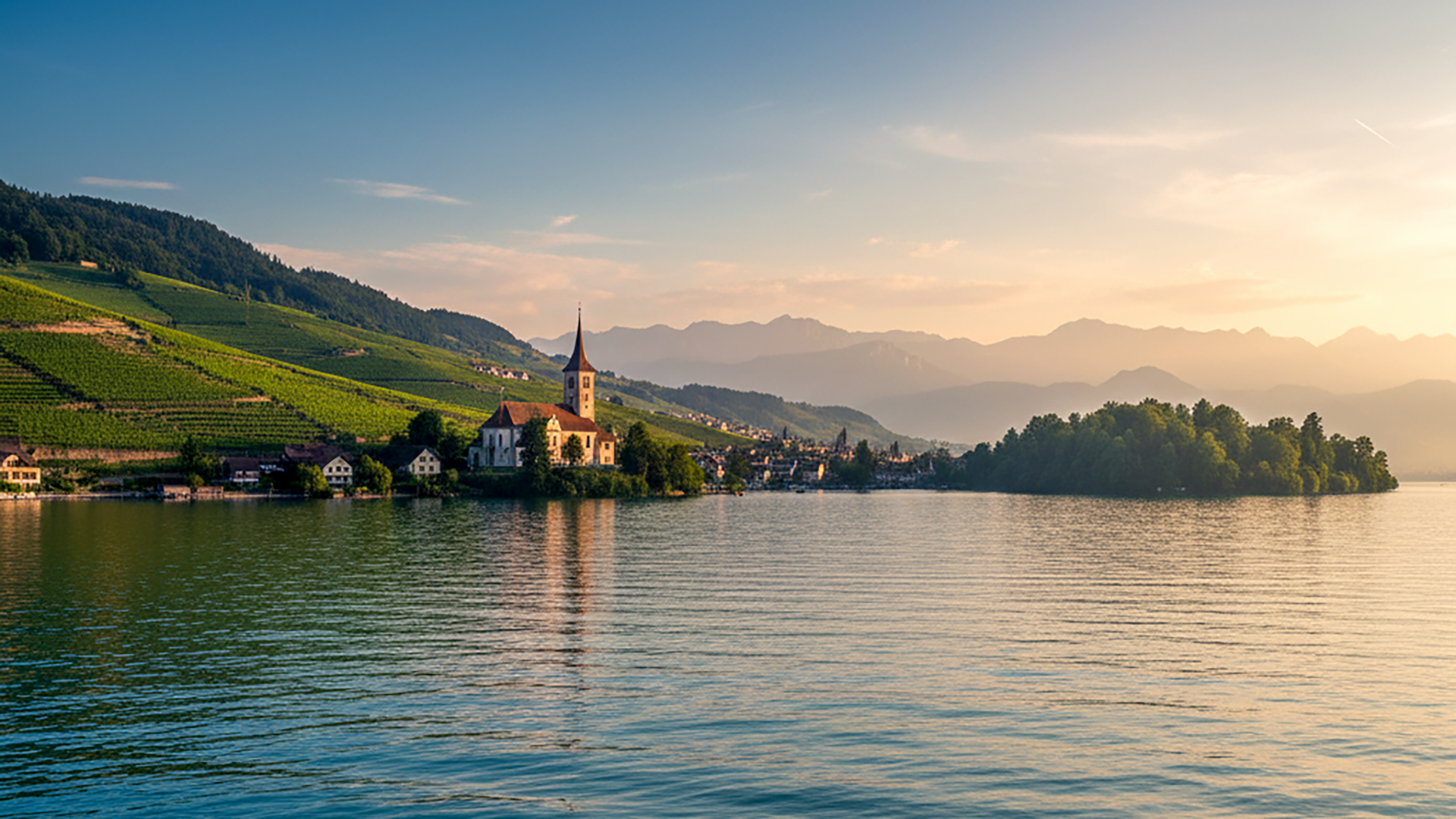
Vaud, in the heart of French-speaking Switzerland, is one of the most important wine-growing cantons in Switzerland. With around 3,800 hectares of vineyards, it is the second largest wine-growing region in the country and is divided into six sub-regions: La Côte, Lavaux, Chablais, Côtes de l’Orbe, Bonvillars and Vully. Each of these sub-regions produces its own AOC wines, which reflect the diversity and uniqueness of the Vaud region. Each of these regions has its own characteristics, shaped by location, climate and soils. Together, they form a multifaceted wine region that combines tradition with modern winemaking.
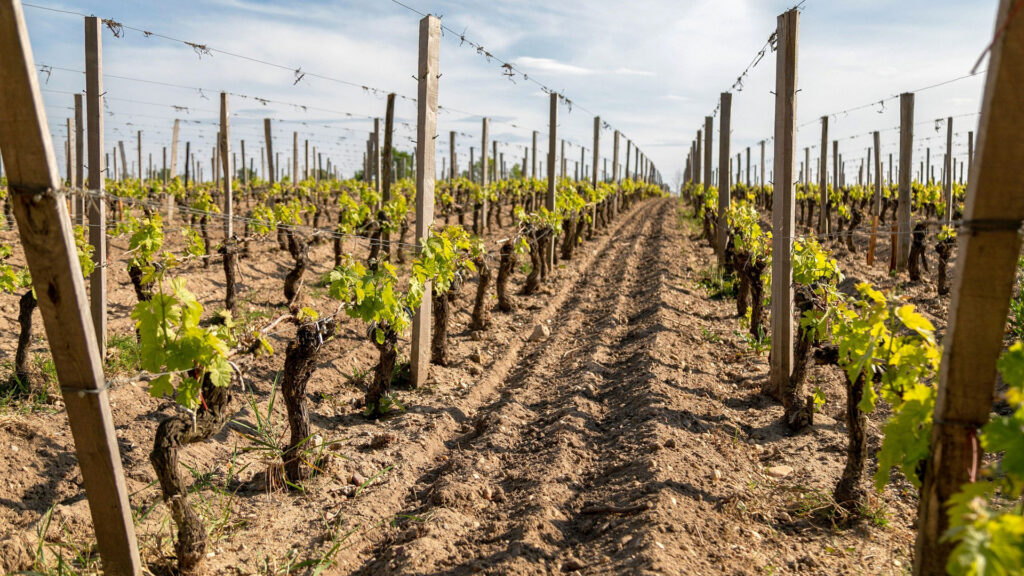
The wine-growing region of Vaud is known for its strong identity and deep roots in history. The Romans already planted vines here, in the Middle Ages monks contributed to the cultivation of the slopes, and today it is innovative winegrowers who are exploiting the region’s potential. The calcareous soils and the unique region with its special landscape features have a decisive influence on the quality and character of the wines. The Vaud region is known for some of the best wines in Switzerland. In particular, the proximity to Lake Geneva and other lakes has a positive effect on the microclimate and gives the wines a distinctive character.
The history of viticulture – from the Romans to the present day
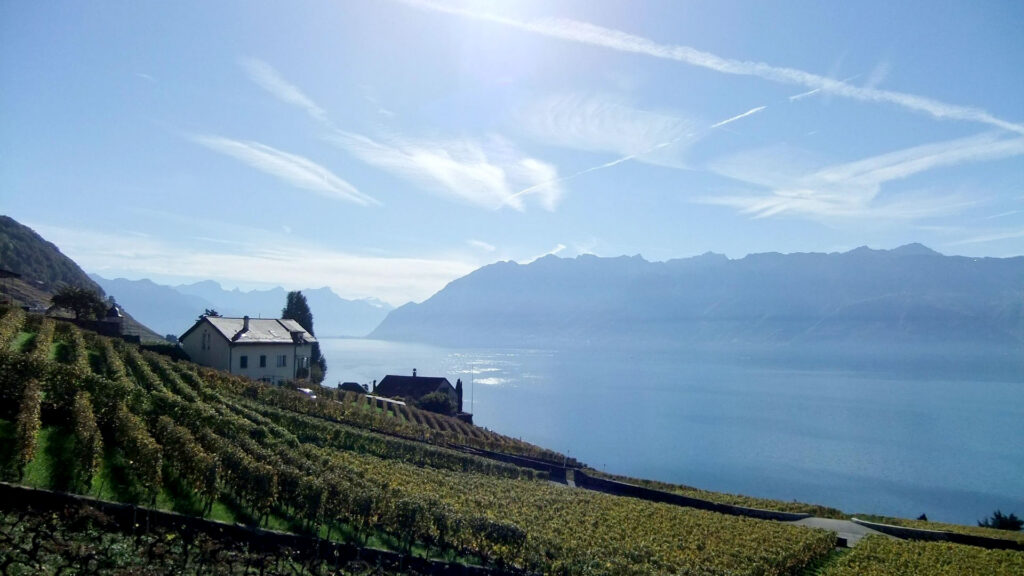
Viticulture in the Vaud region has centuries of development behind it. The Romans planted the first vines here, and later it was mainly monasteries that promoted viticulture. In the Middle Ages in particular, the Cistercian monks shaped the landscape. The famous Lavaux with its terraced slopes on Lake Geneva can be traced back to their work – an impressive example of how strongly religious orders have shaped the region’s wine landscape.
The six AOC regions of Vaud
La Côte – between rolling hills and Lake Geneva
La Côte stretches between Nyon and Lausanne along Lake Geneva. With almost 2,000 hectares, it is the largest sub-region of Vaud. Lime-rich soils dominate here, giving Chasselas wines a lively freshness. The hilly landscape, proximity to the lake and traditional villages characterize this region.
Mont-sur-Rolle is one of the best-known wine villages in the region and exemplifies the long wine-growing tradition of La Côte.
There are numerous castles along La Côte, which are historical buildings that underline the cultural importance of the wine region and can be visited during vineyard walks.
The many wineries in the region not only shape wine production, but are also an important part of wine tourism and invite visitors to taste and explore the regional wine culture.
Lavaux – world-class terraced vineyards
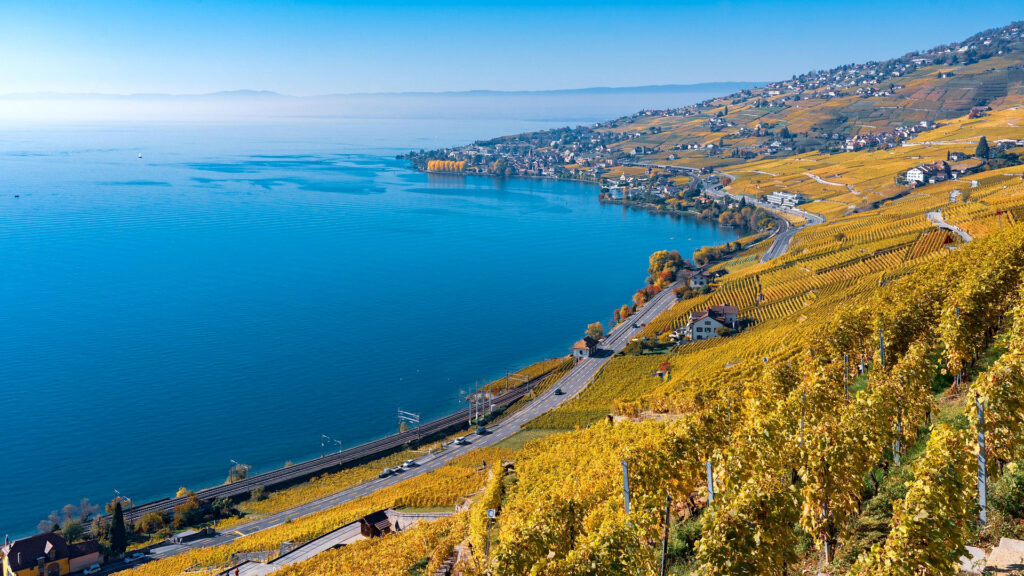
The spectacular Lavaux lies between Lausanne and Montreux. The terraced vineyards, which extend over 800 hectares, have been a UNESCO World Heritage Site since 2007. Regular tastings are offered in the wine cellars and on the terraces of Lavaux, where visitors can experience the local wine culture at first hand. The steep slopes, which fall almost directly into Lake Geneva, create unique conditions for viticulture. Sites such as Dézaley or Calamin are Grand Crus that produce complex, storable Chasselas wines that are internationally acclaimed and rank among the best wines in Switzerland.
Chablais – viticulture between lake and mountains
The Chablais is located at the eastern end of Lake Geneva. The region is characterized by the Föhn, a warm, dry fall wind that warms and dries the grapes in autumn. This promotes ripening and contributes to the production of powerful wines with particular mineral and flinty notes, which benefits viticulture in the region. In addition to the classic Chasselas, aromatic varieties such as Gewürztraminer are also produced here.
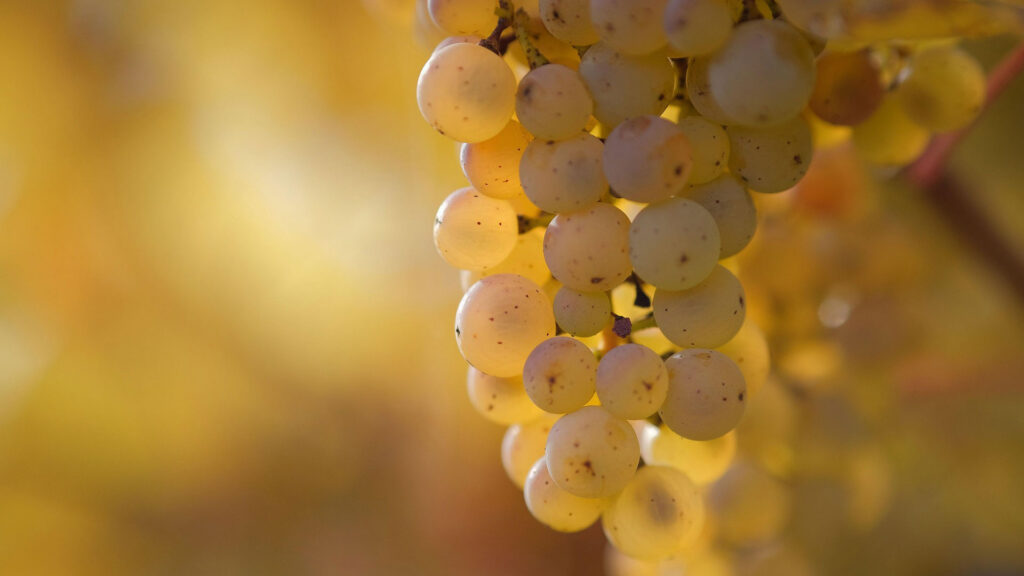
The vineyards of Chablais characterize the landscape between the lake and the Alps and are largely responsible for the high quality of the wines. Yvorne is a renowned wine village in the Chablais, known for its unique terroir and its characteristic grape varieties. The varied landscape ensures an exciting diversity in the wines, whose importance for the culture and tradition of the Chablais remains unbroken to this day.
Côtes de l’Orbe – historic center
Between Yverdon-les-Bains and Lausanne lies the Côtes de l’Orbe, one of the oldest wine-growing regions in Vaud, whose name and historical center go back to the town of Orbe. The clay and limestone soils produce powerful red wines, particularly from Pinot Noir and Gamay. The long tradition of viticulture can still be felt in this region today.
Bonvillars – on the shores of Lake Neuchâtel
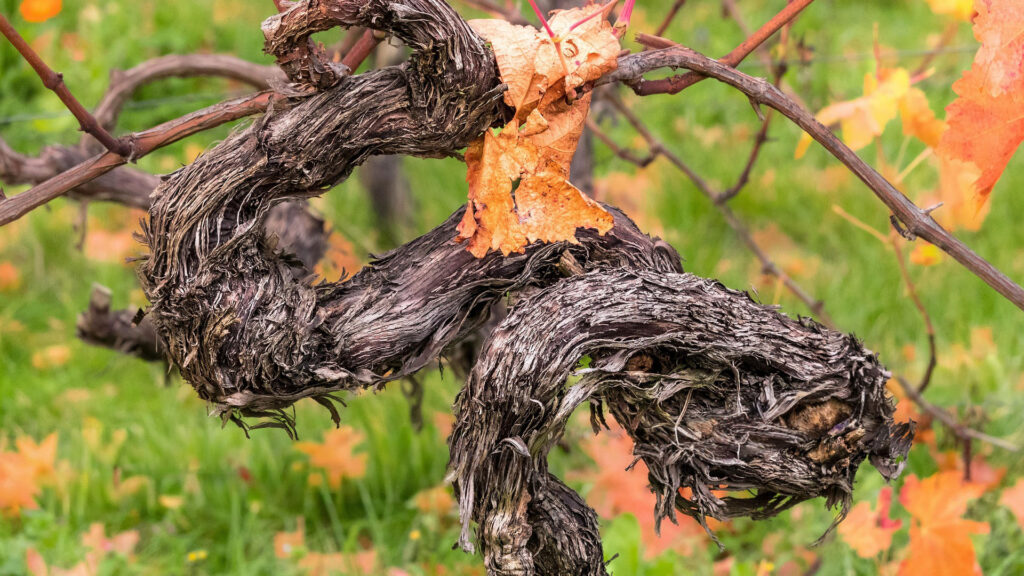
To the north of Lake Neuchâtel lies Bonvillars AOC, a controlled designation of origin in the north of the canton of Vaud, with around 190 hectares of vineyards. The limestone-rich soils and the vineyards’ proximity to the lake, which has a positive influence on the microclimate and ripening conditions, produce elegant Chasselas wines and structured Pinot Noirs. Although Bonvillars is smaller than other areas, it offers a remarkable diversity.
Vully – the smallest AOC region in Vaud
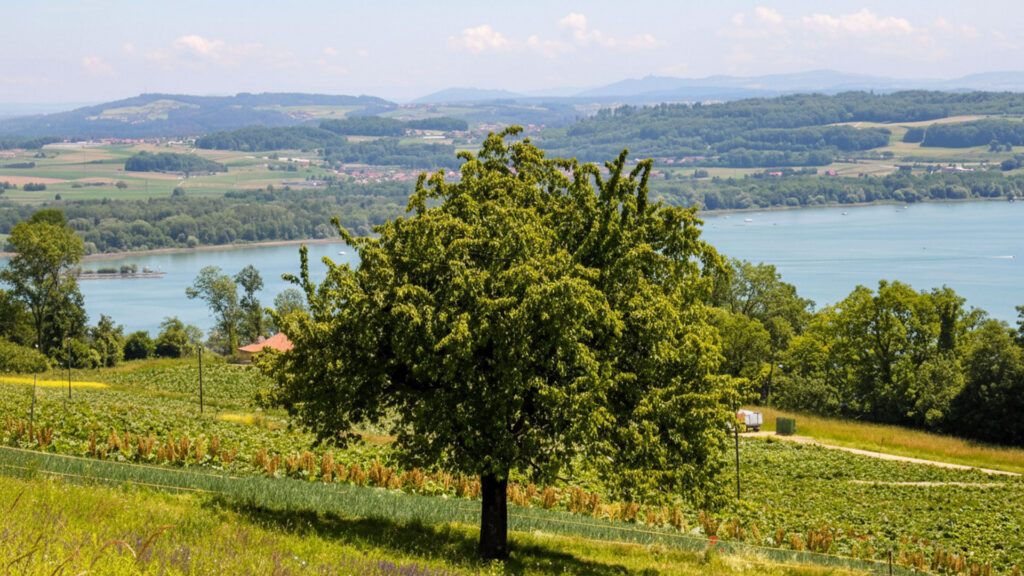
Vully on Lake Murten is the smallest wine-growing region in Vaud. Despite its small size, it offers a surprisingly wide range of wines. In addition to Chasselas, red wines full of character are produced here, which benefit from the mild lake climate.
Grape varieties and wine styles
Chasselas – the symbol of Vaud
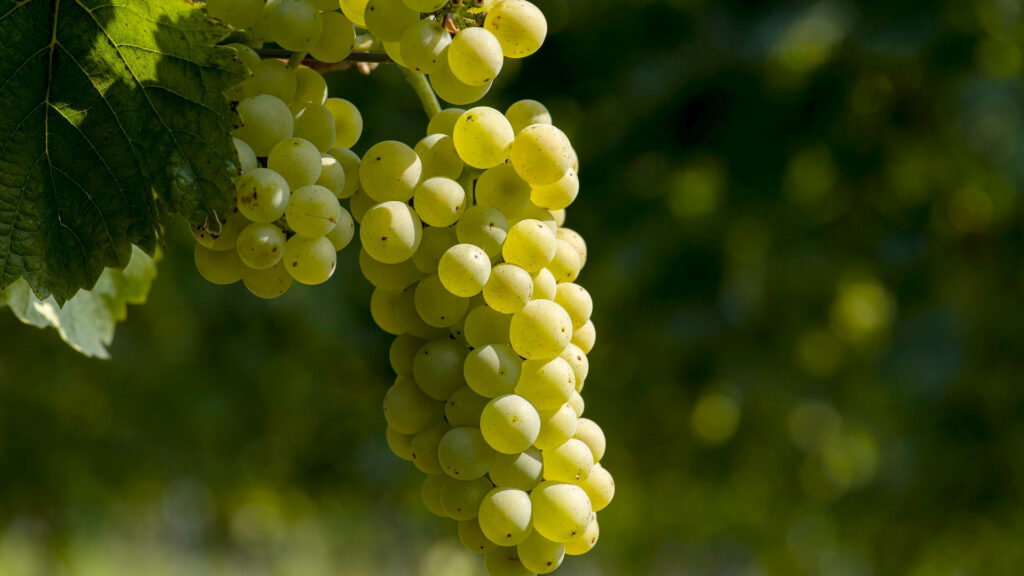
The Chasselas grape variety is inextricably linked with the canton of Vaud. Around two thirds of the vineyard area is planted with it. It reflects the terroir in a special way and shows different facets depending on its origin – from fresh, light white wines to complex and mineral wines.
Pinot Noir and Gamay – the red classics
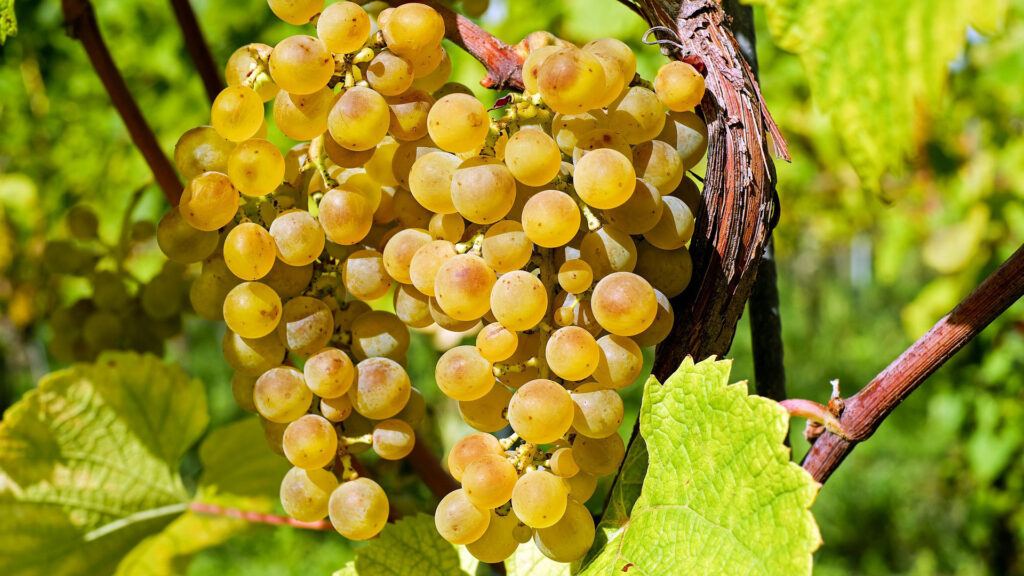
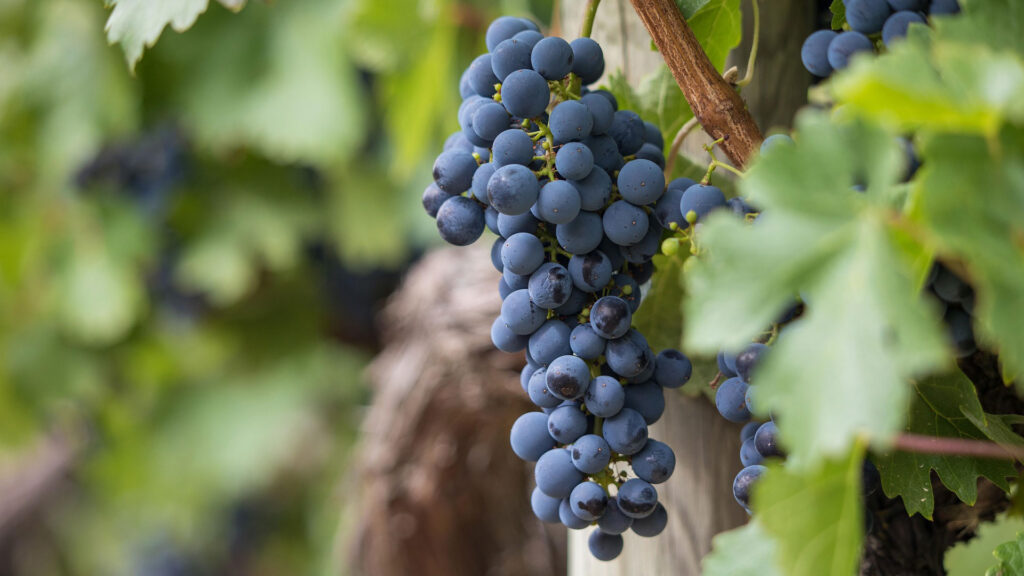
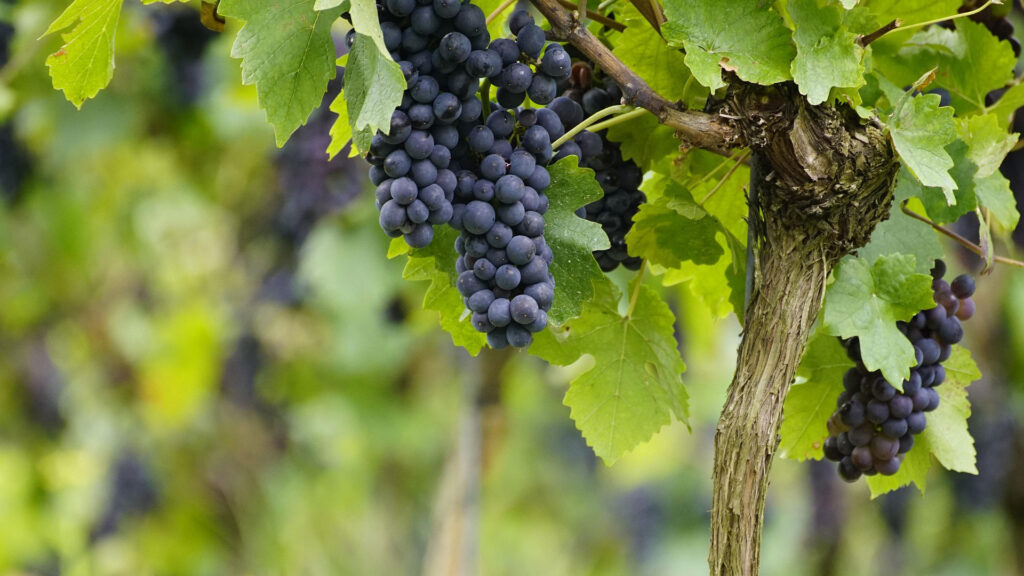
Pinot Noir and Gamay form the backbone of the red wines. Pinot Noir produces elegant, structured wines with fine fruit, while Gamay stands for lighter, aromatic red wines. In La Côte and Vully in particular, young winegrowers have revived the potential of these varieties.
Other grape varieties and specialties
In addition to the main varieties, Chardonnay, Pinot Gris, Garanoir and Gamaret are also important. Winegrowers also cultivate old specialties such as Plant Robert – a rare red variety that is cultivated almost exclusively in Lavaux and is now considered a regional rarity.
Wine and cuisine – typical combinations
Vaudois cuisine is closely linked to viticulture. Chasselas in particular is considered the perfect accompaniment to cheese dishes such as fondue, raclette, Vacherin Mont-d’Or or Tomme Vaudoise.
Red wines made from Pinot Noir or Gamay harmonize with meat dishes – from entrecôte to lamb and game. White wines such as Chardonnay or Pinot Gris emphasize the delicacy of fish and seafood. The culinary tradition of the Vaud region is thus not only evident on the plate, but also in the glass.
Wine tourism in the canton of Vaud
The canton of Vaud is a paradise for wine lovers and explorers who want to experience the authentic Vaud terroir. One of Switzerland’s most diverse wine regions unfolds between the shores of Lake Geneva, Lake Neuchâtel and Lake Murten, nestled between the rolling hills of the Pre-Alps and the imposing backdrop of the Alps. Centuries of winegrowing tradition, modern wineries and an impressive selection of AOC wines come together here.
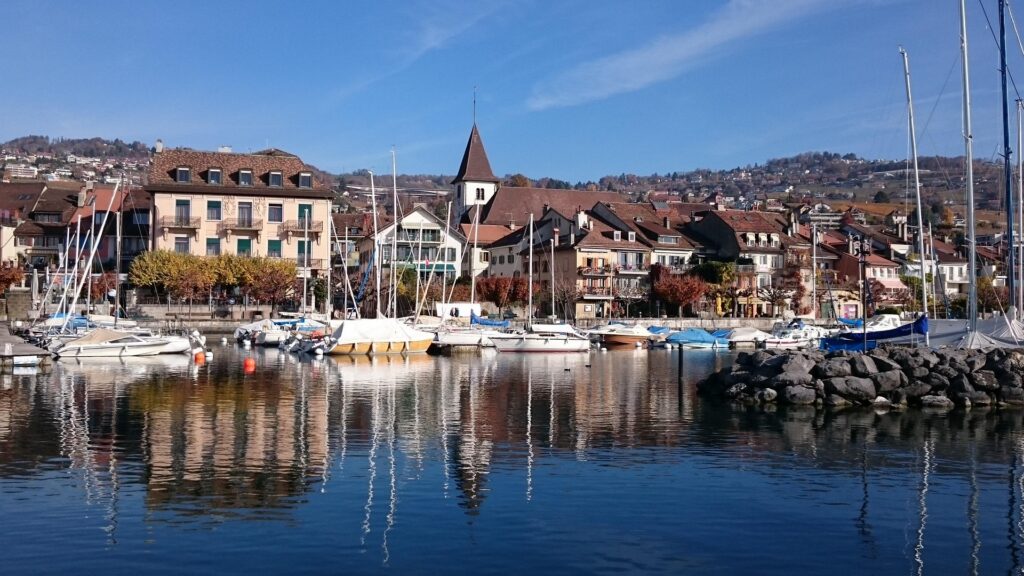
The eight AOC regions of Vaud – from La Côte to Lavaux, Chablais, Bonvillars, Côtes de l’Orbe and the charming Vully – invite you to enjoy a journey of discovery. Each sub-region inspires with its own character traits: The steep terraces of Lavaux and Epesses, the Mediterranean flair on the lakeshore of Rolle, the fresh breeze on Lake Neuchâtel in Bonvillars or the sunny vineyards around Morges and Vinzel. Places such as St-Saphorin, Bex, Grandson or the picturesque Vully are perfect starting points for a gourmet break or a wine hike with friends and family.
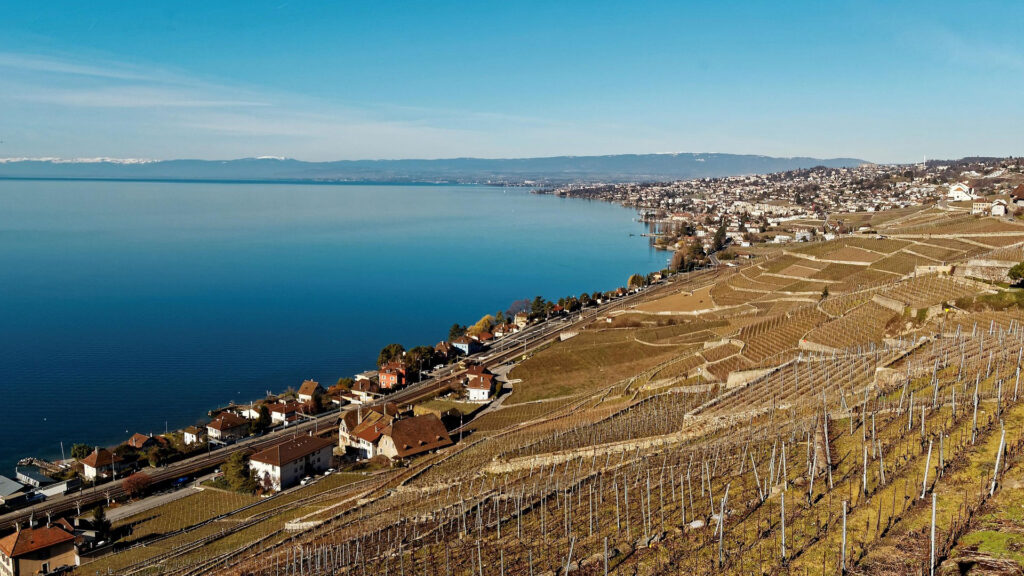
The region’s wineries open their doors for tastings, guided tours and encounters with the producers. Here you can feel the know-how that has been passed down from generation to generation and experience the harmony between wine, landscape and hospitality. Whether in historic wine cellars, modern tasting rooms or on sunny terraces with views of the lakes and mountains – the diversity of Vaud wines can be discovered anew in every location.
Vaud’s climate, characterized by the warmth of the foehn winds, the intense sunshine and the protective proximity of the lakes, creates ideal conditions for the vines. This results in fresh, elegant Chasselas, spicy Pinot Noirs and Gamays as well as numerous other varieties that reflect the potential of the Vaud terroirs. The quality of the wines is internationally recognized and makes the region a center of Swiss viticulture.
Lausanne, a UNESCO World Heritage Site and the cultural heart of Vaud, is an ideal starting point for excursions to the surrounding wine regions. The proximity to the vineyards, the diversity of varieties and the opportunity to buy directly from the producers make wine tourism in Vaud an unforgettable experience. Whether as a gift for friends, a moment of pleasure with the family or as part of a culinary voyage of discovery, the wines of Vaud are always an expression of quality, diversity and joie de vivre.
The Vaud wine regions are a living link between tradition and modernity, between lake and mountain, between pleasure and culture. Visitors to Vaud are immersed in a world where wine, landscape and hospitality merge in perfect harmony.
Frequently asked questions about the Vaud wine-growing region
Which grape varieties are typical of Vaud?
Vaud is characterized above all by Chasselas, which accounts for almost 70% of the vineyard area. Among the red varieties, Pinot Noir and Gamay are in the foreground, supplemented by Chardonnay, Pinot Gris, Gamaret and Garanoir.
What does Grand Cru mean in Vaud?
Grand Cru refers to sites of particularly high quality and strictly defined criteria. In Vaud, for example, Dézaley and Calamin in Lavaux have this status.
When is the Fête des Vignerons celebrated?
This unique winegrowers’ festival takes place in Vevey at irregular intervals of around 20 to 25 years. It is a major cultural event that celebrates the work and tradition of winegrowers. The last edition in 2019 attracted over a million visitors.
Which dishes go well with Vaud wines?
Chasselas is an excellent accompaniment to cheese dishes and regional specialties. Pinot Noir and Gamay go well with meat, while white wines such as Chardonnay or Pinot Gris are ideal accompaniments to fish and light starters.
Are there wine tours in Vaud?
Yes, especially in Lavaux, there are numerous paths leading through the vineyard terraces with views of Lake Geneva. They combine nature, culture and wine tasting in a unique way.