

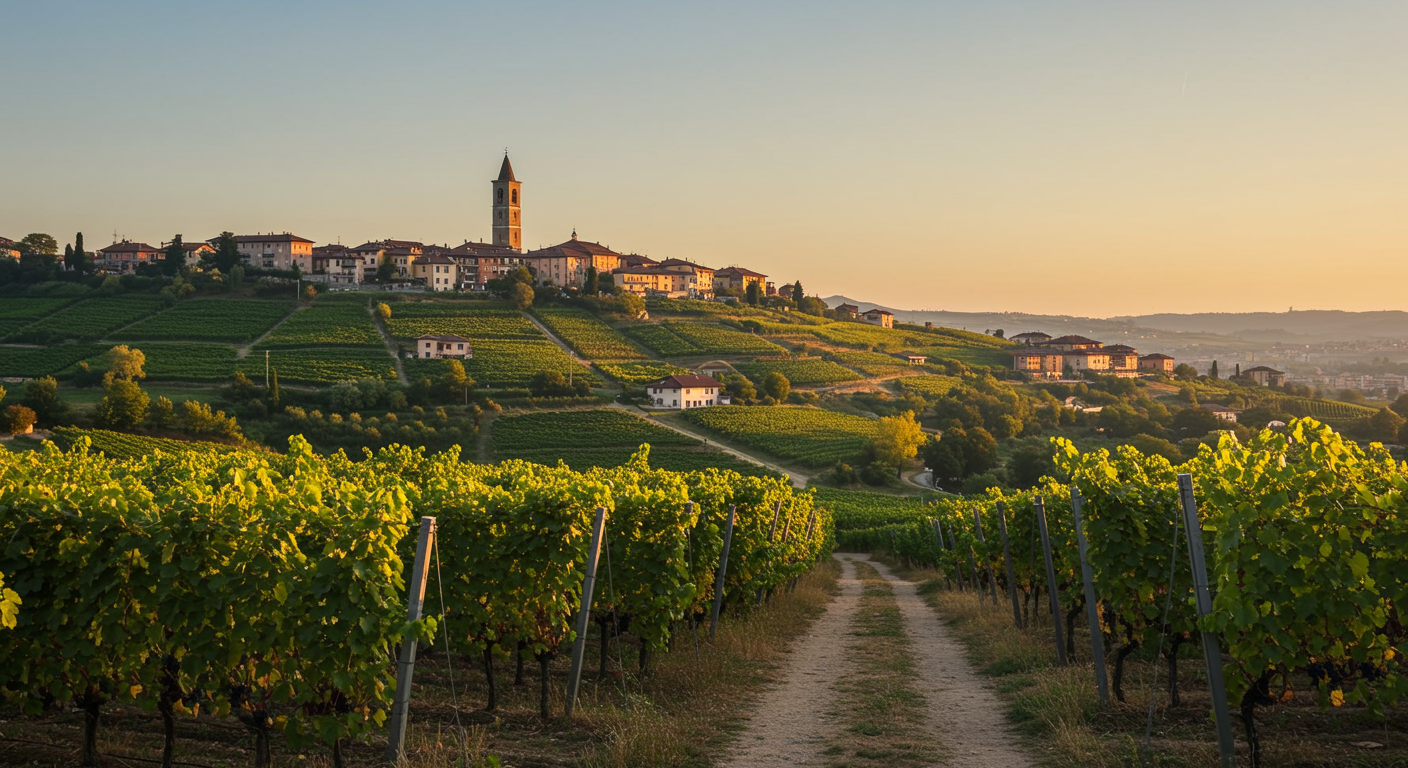
Barbera d’Asti between everyday life and aspiration
With its lively freshness, pleasant acidity and versatility, Barbera d’Asti is the ideal everyday companion, both when drunk young and when matured. This wine is like a trusted friend that brings joy to life with honesty and charm. Barbera d’Asti is one of those wines that defy quick categorization. It is both down-to-earth and sophisticated, accessible and complex, familiar and yet full of nuances. As a red wine from the heart of Piedmont, it is closely linked to everyday life without being banal. Its role is not that of a loud soloist, but that of a reliable companion that holds food, conversation and moments together.
It is precisely this quiet matter-of-factness that makes Barbera d’Asti so fascinating. It does not aim to impress, but to convince. Not through opulence, but through balance. Some of its characteristics, such as freshness, fruitiness and pronounced acidity, give it an energy that clearly distinguishes it from many other Italian red wine varieties.

Origin and historical context of the Barbera vine
The Barbera grape variety is deeply rooted in Piedmont. The first written references date back to the Middle Ages, when it was already valued as a reliable vine for local consumption. The Barbera vine was first documented in Piedmont as early as the 13th century, which underlines its long tradition in the region. Its spread was concentrated early on in the hills around Asti, Alba and Monferrato, where it still characterizes the landscape and culture today. The cultivation of the Barbera grape in these areas is closely linked to the regional cultivation methods and the development of viticulture in Piedmont.
In contrast to prestigious varieties such as Nebbiolo, Barbera was for a long time the wine of farmers and craftsmen. It produced stable yields, ripened reliably and produced wines that could be drunk early. Barbera is a high-quality grape variety that is cultivated in Piedmont. After Sangiovese and Montepulciano, Barbera is the third most common red grape variety in Italy. The Barbera grape is known for its resistance to disease and its ability to produce good yields even in less than ideal locations. A special variety is the Barbera Grossa, which is valued for its strength and fullness and plays an important role in certain regions of Piedmont. The Barbera grape is remarkably adaptable to different terroirs, which is reflected in the character of the wines. It is also genetically closely related to the Nebbiolo grape. It was only in the course of the 20th century that a qualitative reorientation began, in which the potential of the grape variety was consciously explored. Barbera d’Asti developed from a pure everyday wine to a serious wine of origin with an independent profile.
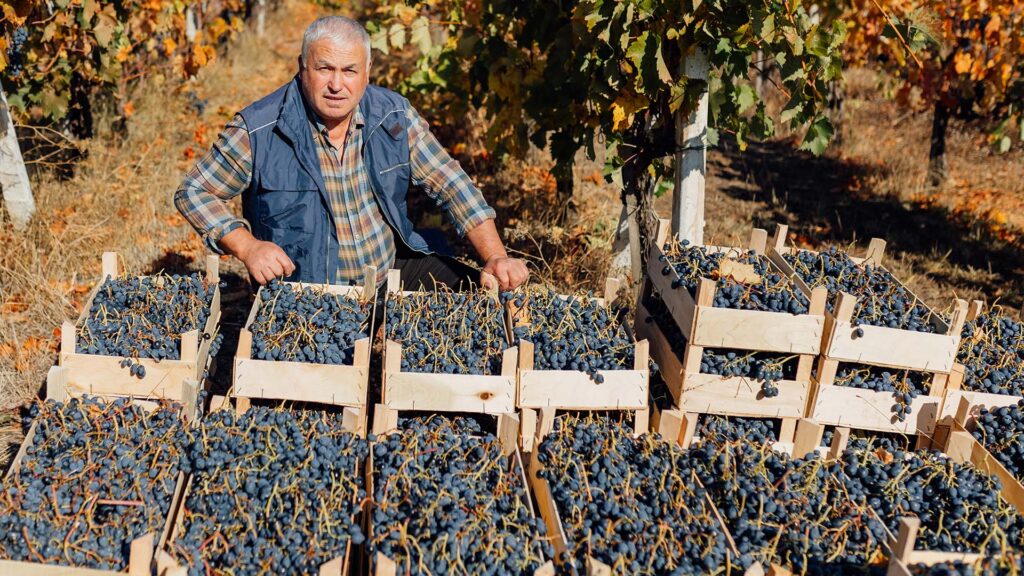
The Barbera grape and its characteristics
The Barbera grape is characterized by a high natural acidity, even in warm years. It is precisely this characteristic that is its greatest asset. While many red wine varieties lose their tension under heat, Barbera retains its freshness. Barbera ripens relatively early and produces consistently high yields and a richly colored must. The grapes develop intense fruit aromas without accumulating too much sugar.
There are different types of Barbera wines, such as Barbera d’Asti, Barbera d’Alba and Barbera del Monferrato, which are characterized by different origins, styles and characteristics. The adaptability of the Barbera grape to different climatic zones allows it to be grown in different regions, with the climatic conditions having a significant influence on the style and quality of the wines.
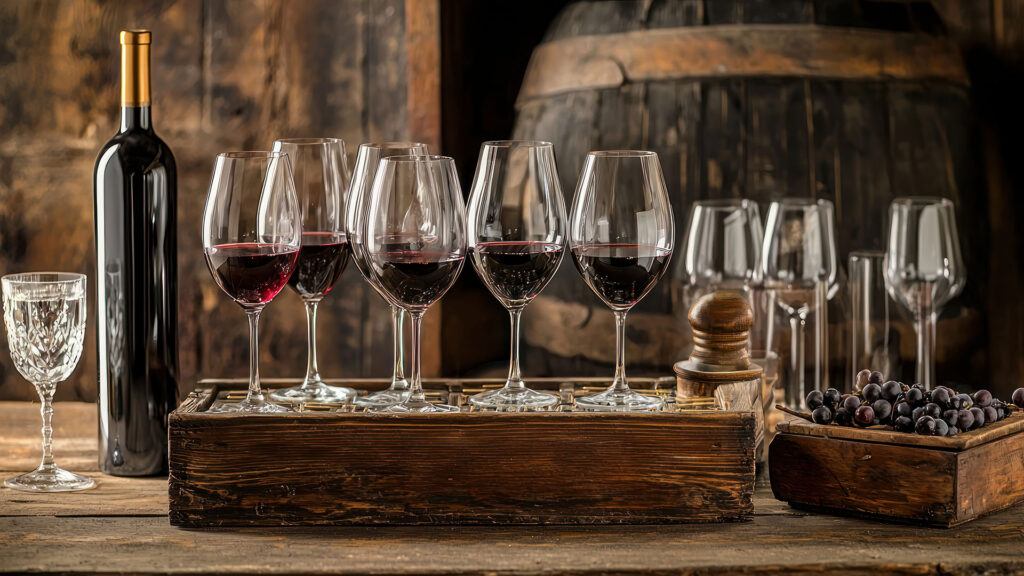
Tannin plays a subordinate role in Barbera. The wines rarely appear angular or austere, but rather juicy and open. Their color is deep ruby red, often with violet reflections, which is due to the high anthocyanin content of the grape skin. This combination of color, fruit and acidity gives Barbera d’Asti its unmistakable expression.
Terroir and growing areas around Asti
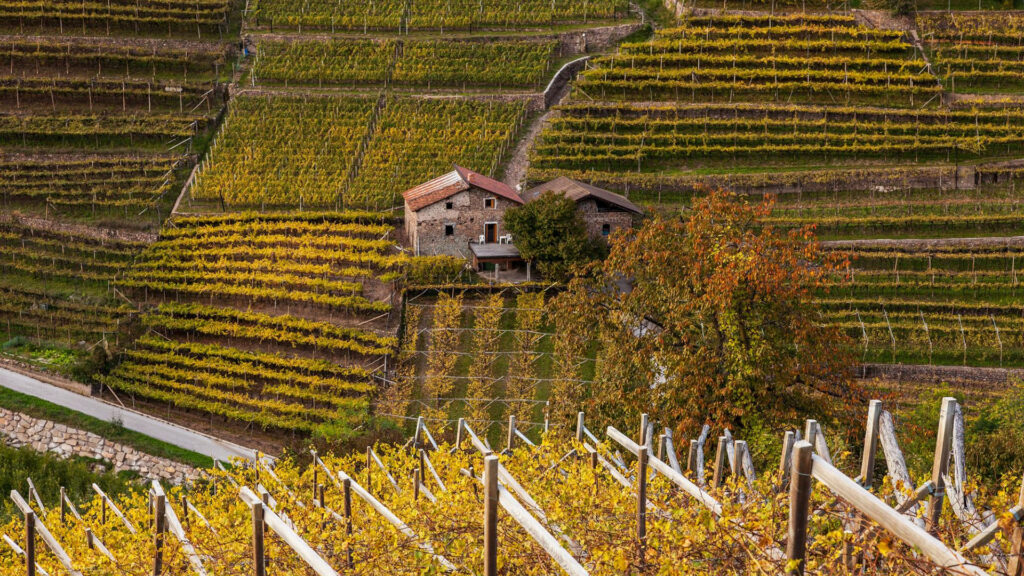
Barbera d’Asti is produced in a diverse landscape. The hilly landscapes of the province of Asti offer ideal conditions for growing Barbera, as they have different altitudes, exposures and soil types. Calcareous marl, clay and sandy deposits characterize the vineyards and influence the style and structure of the wines. Cultivation in this region follows traditional and modern methods that are adapted to the regional characteristics.
The proximity to the Apennines ensures air circulation, while the continental climate with warm days and cool nights creates ideal conditions for aromatic ripeness. These natural factors contribute to the fact that Barbera d’Asti always retains tension and freshness despite its fruitiness. The DOCG areas in Piedmont produce the most characteristic and highest quality Barbera wines. In addition to Asti and Monferrato, Lombardy is also considered an important growing region for Barbera, although special grape varieties are cultivated there. Large quantities of Barbera vines are cultivated in the region, which is reflected in the production volumes.
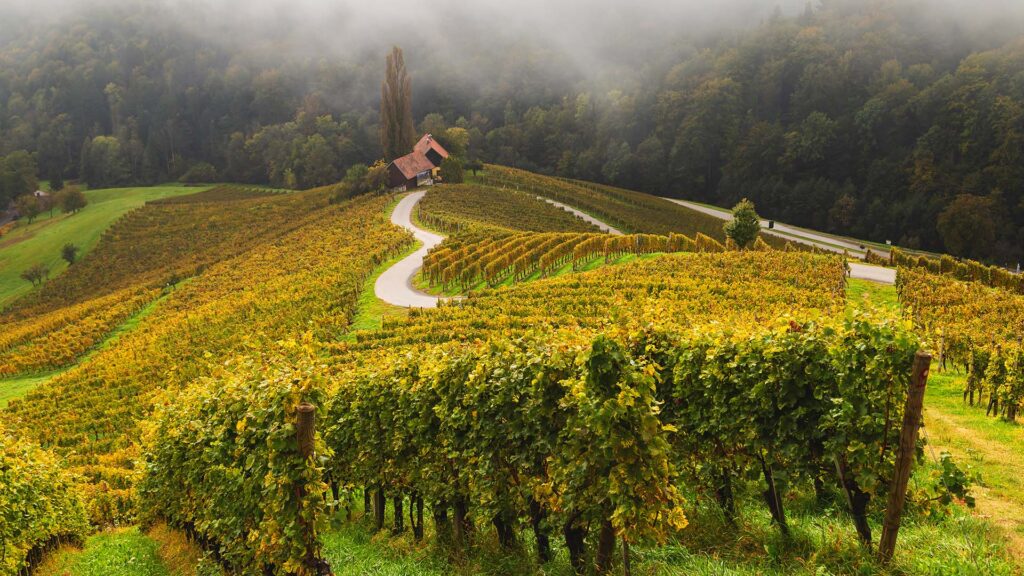
Barbera del Monferrato – The sister in the shadow?
Barbera del Monferrato is often overshadowed by its famous sister Barbera d’Asti, but this Italian grape variety has long since found its own place in the wine world. In Monferrato, one of the most traditional regions for Barbera wines, Barbera del Monferrato has thrived for centuries and impresses with a remarkable range of styles and qualities.
The grape variety is cultivated in several provinces, including Asti, Alessandria and Turin. This diversity of areas and soils – from calcareous sites to sandy and clayey plots – is reflected in the versatility of the wines. Barbera del Monferrato is adaptable and produces different facets depending on vinification and terroir. The delivery time for wines from this region is usually only a few working days, so that wine lovers can quickly enjoy this specialty.
In terms of vinification, the spectrum ranges from traditional wood ageing to modern, fruit-driven varieties. Especially in combination with other grape varieties, Barbera del Monferrato develops a special texture and depth as a component in cuvées. The wines are usually ruby red in the glass, with lively acidity and an aromatic profile characterized by plums, raspberries and other red berries. Spicy notes such as pepper and a hint of vanilla – especially when aged in wood – lend the wine additional complexity.
The history of Barbera del Monferrato dates back to the 13th century and is closely linked to the development of Italian wine culture. Today, the grape variety has long since made the leap beyond the country’s borders and is also successfully cultivated overseas, for example in the USA and Uruguay. This international presence underlines the quality and potential of the variety and offers wine lovers the chance to discover Barbera del Monferrato in a wide variety of forms.
In culinary terms, Barbera del Monferrato is a real all-rounder. Whether with antipasti, classic starters or a hearty lasagne – the lively acidity and fruity aromas harmonize perfectly with Italian cuisine. The combination with spicy dishes, for example with a pinch of pepper or fine vanilla notes, brings out the versatility of the wine particularly well.
Barbera del Monferrato is therefore much more than just a “sister in the shadow”. It stands for Italian joie de vivre, culinary diversity and a quality that is worth discovering. Anyone who gets involved with this grape variety will find a wine that combines tradition and modernity, everyday life and uniqueness in a unique way.
Barbera d’Asti and the importance of the vintage
Hardly any other grape variety reacts as clearly to the vintage as Barbera. In warm years, the wines show ripe cherries, plums and a softer texture. Cooler vintages emphasize acidity, freshness and red berries. These variations are not a shortcoming, but an expression of authenticity.
The path of Barbera d’Asti was also characterized by fluctuations: In the 1980s, the area under cultivation declined due to overproduction and scandals, but the grape variety regained importance thanks to targeted quality improvements.
For wine lovers, this means diversity. Barbera d’Asti is not a standardized product, but a living wine that reflects the climate and vegetation. It is precisely these differences in vintage that make it interesting for all those who not only want to taste origin, but also experience it.
Expansion between tradition and modernity
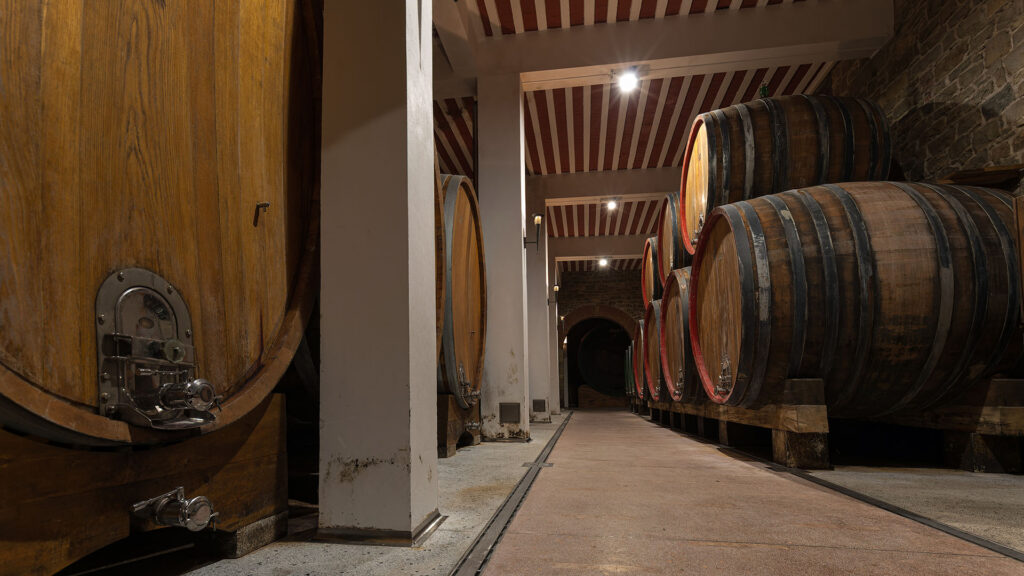
Traditionally, Barbera d’Asti was matured in large wooden barrels or in neutral tanks. The aim of production was to integrate the acidity and stabilize the fruit. Today, barriques and oak barrels are used for ageing alongside large wooden barrels, giving the wine additional aromas, complexity and structure. Maturing in barriques and oak barrels also increases the ageing potential and ensures the harmonious development of the wine. Alternatively, Barbera wines are also matured in stainless steel tanks or large wooden barrels to preserve freshness and fruitiness. The residual sugar content plays an important role in the taste profile, as it influences the perception of sweetness and balance. With the qualitative breakthrough from the 1980s onwards, wood ageing in smaller barrels was also introduced. However, barrique never became an end in itself, but a tool.
The best examples show that Barbera reacts sensitively to wood. Too much of it overpowers its freshness, too little lacks structure. Successful ageing is that which gives the wine depth without blurring its origin. Wood complements, it does not dominate.
Barbera d’Asti Superiore and shelf life
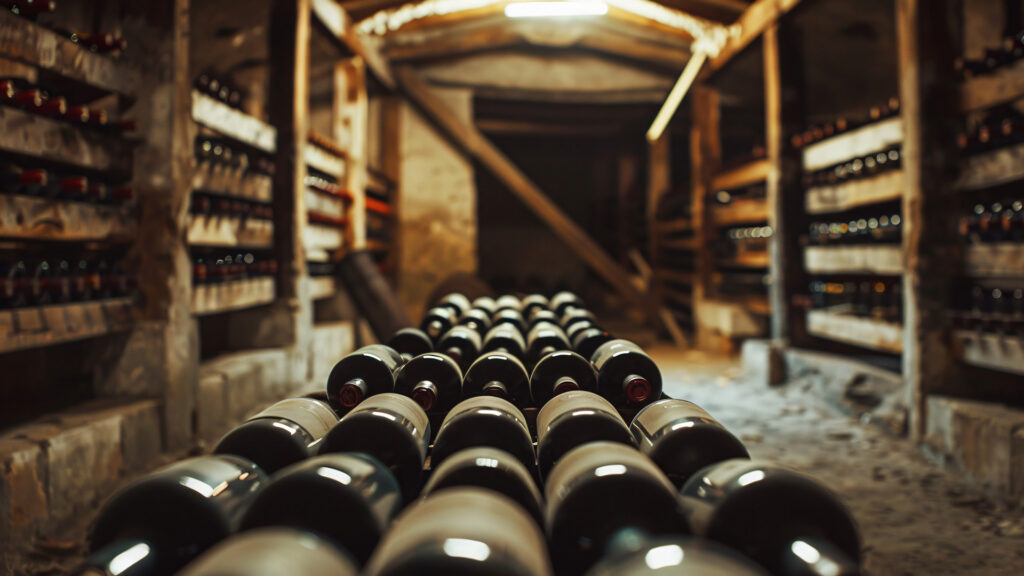
Barbera d’Asti Superiore stands for wines with a higher alcohol content, longer ageing period and greater structure. These versions show that Barbera can certainly be stored if the yield and ageing are right. The pronounced body of Barbera d’Asti Superiore contributes significantly to its ageing potential and gives the wine an elegant fullness. As the wine matures, more complex aromas develop, the fruit recedes and spices and earthy notes become more prominent.
Nevertheless, the acidity always remains present. It lends liveliness and prevents heaviness, even in mature wines. In mature Barbera d’Asti Superiore, subtle notes of spices often emerge, giving the wine additional depth. Barbera d’Asti Superiore is therefore a wine for the patient without appearing elitist.
Barbera d’Asti and Barbera d’Alba in comparison
The comparison with Barbera d’Alba is obvious, but often falls short. While Barbera d’Alba is more strongly characterized by its proximity to Nebbiolo and appears more structured, Barbera d’Asti remains closer to its culinary purpose. It is more open, fruity and accessible.
This is not a judgment of quality, but a stylistic distinction. Barbera d’Asti seeks proximity to the kitchen, not to the medal. Its strength lies in its interaction with food, not as a solo drink.
Barbera d’Asti as a reflection of Piedmontese cuisine
Few wines are as closely associated with regional cuisine as Barbera d’Asti. Its acidity makes it the ideal partner for tomato-based dishes, which are ubiquitous in Piedmont. Pasta with ragù, braised sauces or simple dishes with olive oil and herbs benefit from its freshness.
Barbera d’Asti is also versatile with meat. Veal, beef or poultry are accompanied, not overpowered. The wine enhances aromas rather than dominating them and creates a balance between fat, acidity and spice.
Barbera d’Asti as a modern accompaniment to food
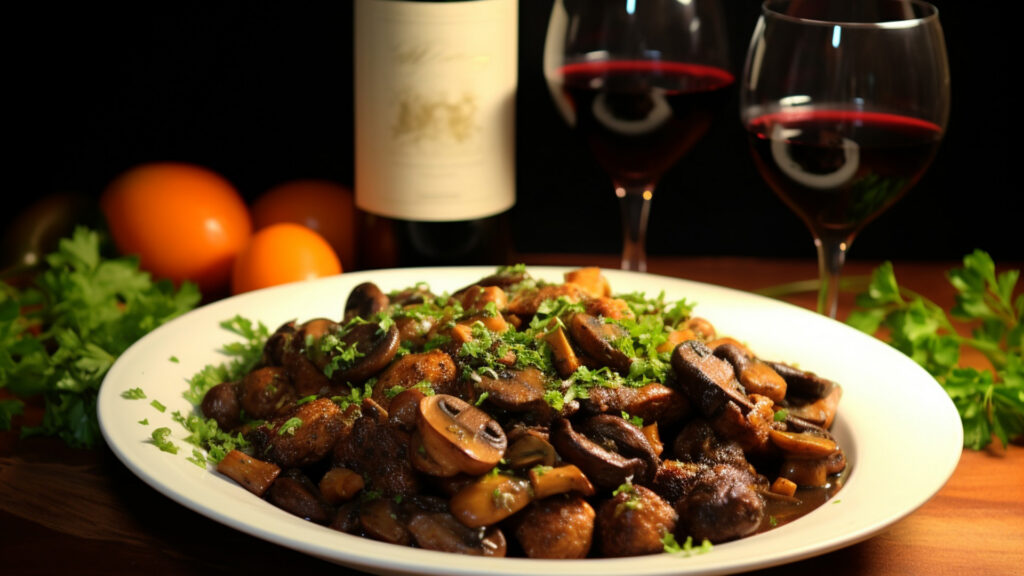
Barbera d’Asti is equally convincing in contemporary cuisine. On the palate, it delights with a balance of freshness, lively acidity and fine tannin structure, which makes the taste experience special. Its freshness harmonizes with vegetarian dishes, such as lentils, eggplants or mushrooms. Slightly spicy dishes also benefit from its fruitiness, which absorbs the spiciness without being sweet. The ideal serving temperature for Barbera d’Asti is between 16 and 18 degrees Celsius – this allows it to develop its full aroma and ensures an even more intense taste experience.
Matured hard cheese brings another dimension into play. Salty, nutty notes contrast the acidity of the wine and emphasize its structure. Barbera d’Asti shows its versatility and culinary value here.
Barbera d’Asti between everyday life and identity
Barbera d’Asti is not a prestige wine in the classic sense. Its importance lies not in its price, but in its consistency. It accompanies generations, meals and rituals. It is precisely this rootedness that makes it a bearer of Piedmont’s identity.
Barbera d’Asti is the work of centuries of tradition and inspiration – a cultural creation that reflects the history and emotions of the region.
At a time when many wines are striving for attention, Barbera d’Asti remains true to itself. It is not a statement, but an attitude. Authentic, honest and reliable.
The future of the Barbera grape variety
Climate change poses challenges for Piedmontese viticulture. This also opens up opportunities for Barbera d’Asti. Its acid stability makes it resistant to rising temperatures. Sustainable production and adapted methods in the vineyard and cellar are crucial to ensure the quality and future viability of Barbera d’Asti. Adjustments in the vineyard and during ageing help to maintain balance.
Many winegrowers see the Barbera grape variety as the answer to the future: less alcohol, more freshness, more drinkability. Barbera d’Asti could thus go from being a traditional companion to a modern reference wine.

Barbera d’Asti in an international context
Although Barbera is primarily associated with Piedmont, today it can also be found outside of Italy. The grape variety is cultivated in various regions of Italy and worldwide, for example in California and Argentina. The quantities of Barbera wines produced internationally are considerable, although the quality depends heavily on the respective growing conditions. Important producers such as Vietti and Michele Chiarlo help to secure the diversity and reputation of Barbera d’Asti in an international context. But nowhere else does it show such depth as in its homeland. Barbera d’Asti remains the benchmark by which all others must be measured.
Its international presence has heightened awareness of the grape variety without relativizing its origins. Barbera d’Asti remains a wine that does not deny its roots.
Barbera d’Asti as an expression of origin
In the end, Barbera d’Asti stands for something rare: for a wine that does not have to choose between everyday life and sophistication. It combines both. Its freshness, acidity and fruit make it accessible, while its origin and structure give it depth. The finish of Barbera d’Asti is particularly noteworthy: it is long, harmonious and leaves lingering, fruity and spicy notes on the palate. Barbera d’Asti has also had the highest Italian wine status DOCG since 2008.
Barbera d’Asti is not a wine for the big show, but for real life. This is precisely where its greatness lies.
Frequently asked questions (FAQ) about Barbera d’Asti
What does Barbera d’Asti taste like?
Barbera d’Asti is fresh, fruity and acidic. Typical aromas are cherries, red berries and plums, accompanied by a juicy structure.
Which grape is Barbera?
Barbera is an autochthonous Piedmontese red wine variety, known for its high acidity, intense color and low tannin structure.
What is the difference between Barbera and Barolo?
Barbera is based on the Barbera grape, Barolo on Nebbiolo. Barolo is richer in tannins and longer-lasting, Barbera is fresher and accessible earlier.
How much does a Barbera d’Asti cost?
Barbera d’Asti is available in different price categories. High-quality examples can already be found in the moderate segment.
What kind of wine is Barbera?
Barbera is a versatile red wine with high acidity, pronounced fruitiness and a strong link to regional cuisine.