

Chasselas as a cultural reference in Switzerland
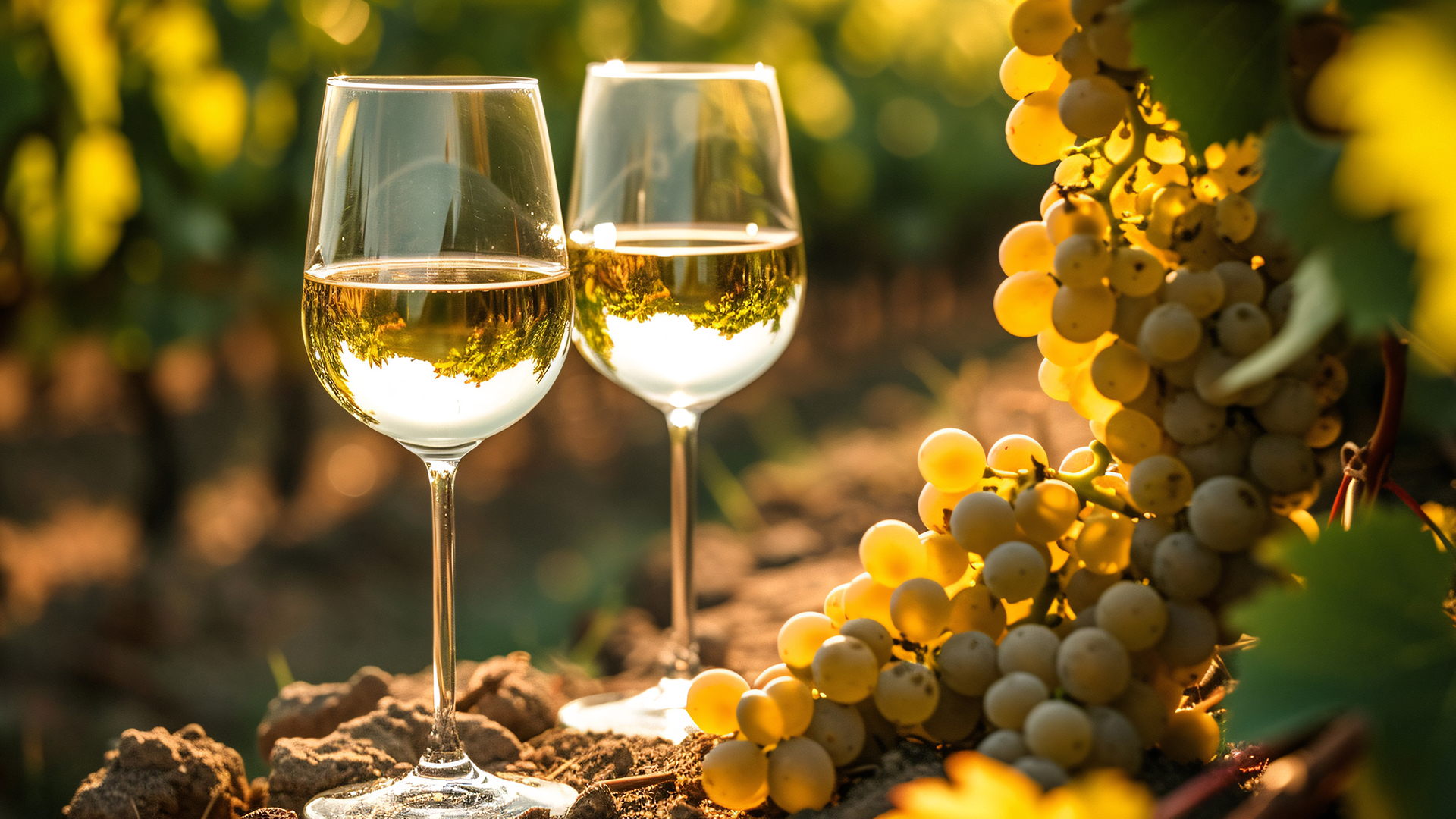
Chasselas occupies a special position in the Swiss wine world that goes far beyond its sensory properties. Hardly any other grape variety is so closely associated with regional identity, everyday culture and culinary tradition. Chasselas is not a wine that aims to impress, but one that accompanies. It is precisely this attitude that makes it an integral part of the collective understanding of taste.
At a time when many white wines seek attention through expressive aromas or powerful ageing, Chasselas embodies a different form of quality. It speaks softly, demands attention and rewards it with precision. This restraint is not a shortcoming, but an expression of self-understanding and maturity.
Origin, source and synonyms of the grape variety
The origin of the Chasselas grape has not yet been clearly established. Various theories place its roots in the eastern Mediterranean region, while others see its origins in western Switzerland. What is certain, however, is that Chasselas has been cultivated in the Alpine region for centuries and established itself early on as an important grape variety.
The large number of synonyms illustrates its wide distribution and cultural adaptability. Chasselas is the common name in Switzerland, Fendant in Valais, Chasselas in Germany and Perlan in France. These names do not stand for different varieties, but for regional variations of the same grape variety.
Chasselas grape and botanical characteristics
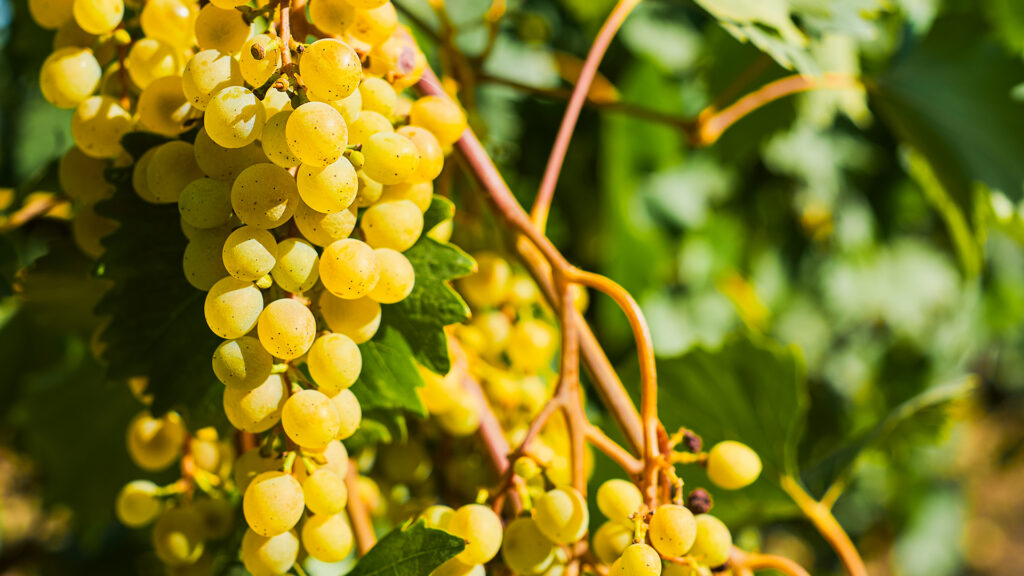
The Chasselas grape is medium-sized, with thin skin and light, juicy flesh. It has moderate acidity and a restrained aroma, which makes it particularly susceptible to terroir influences. The vine sprouts early and also ripens early, making it well suited to cooler climates, but at the same time sensitive to late frost.
Chasselas vines are naturally high-yielding. Historically, this often led to large quantities and low quality. Modern wine production, however, focuses on yield reduction in order to promote concentration, structure and expression. It is precisely this conscious work in the vineyard that has contributed significantly to the qualitative re-evaluation of the grape variety.
Climate, soils and vineyards as quality factors
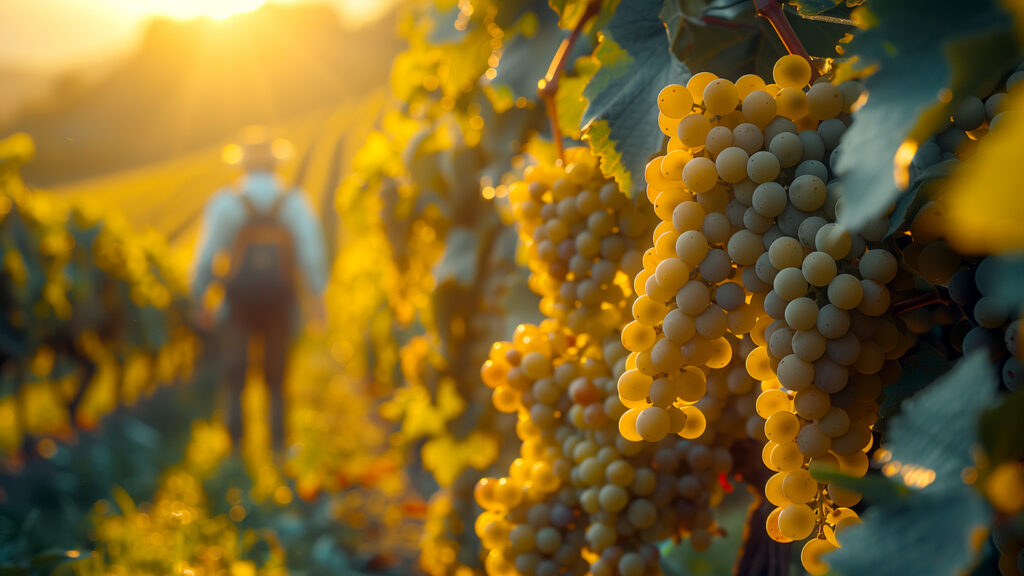
Chasselas prefers a temperate climate with sufficient sunlight and calcareous soils. It thrives particularly well in vineyards on the lake or on gentle slopes, where temperature differences between day and night ensure freshness. Extreme heat has a less favorable effect, as it further reduces the already mild acidity.
Limestone, marl and moraine soils give Chasselas structure and mineral tension. The location has less influence on the aroma than on the texture, freshness and ripeness. It is precisely these subtle differences that make the grape variety particularly suitable for terroir comparisons.
Chasselas in French-speaking Switzerland: Vaud, Geneva and Lake Geneva
In western Switzerland, Chasselas characterizes entire wine landscapes. In the Vaud region, around Lake Geneva, wines are produced that are known for their clarity, freshness and restraint. The proximity to the water has a temperature-balancing effect and favors slow, even ripening of the grapes.
Chasselas also plays a central role in the canton of Geneva. Here it is often somewhat more structured, but always remains balanced. Western Switzerland is considered the heart of the Chasselas culture and a reference for stylistic precision.
Fendant in Valais: style, names and identity
In Valais, Chasselas is known as Fendant. This designation not only stands for a name, but also for a clearly defined style. Fendant is dry, straightforward and designed for easy drinking. The wines are often somewhat stronger than their counterparts from Vaud, but retain their characteristic restraint.
In Valais, Fendant is firmly anchored in the food culture. It accompanies both simple and rich dishes and is part of everyday enjoyment. This naturalness underlines the cultural significance of the grape variety.
Mont-sur-Rolle as an example of terroir and style
Mont-sur-Rolle is one of the best-known Chasselas communities in Switzerland. Here, the grape variety shows how precisely it can reflect its origin. The wines appear calm, structured and possess a fine mineral depth that only becomes apparent with attention.
Such places have made a significant contribution to positioning Chasselas as a terroir grape variety to be taken seriously. They show that finesse is not a shortcoming, but a quality that requires time and concentration.
Grand Cru for Chasselas: sophistication, maturity and depth
The term Grand Cru has a special meaning for Chasselas. It does not stand for opulence or aromatic power, but for precision, site awareness and maturity. Grand Cru Chasselas is produced where yield, soil and microclimate are in a delicate balance.
These wines develop additional nuances as they mature in the bottle. Notes of honey, roasted nuts and fine spice appear alongside citrus fruits and mineral notes. The texture becomes denser without losing freshness. This development shows that Chasselas definitely has ageing potential.
Chasselas in Germany and France
In Germany, Chasselas is known as Chasselas, especially in the Markgräflerland region of Baden. Wines are produced there that are close to the classic Chasselas style: light, fresh and designed to be enjoyable to drink. The role of the grape variety is regionally limited, but culturally deeply rooted.
Chasselas can also be found in France, especially in Alsace and in smaller regions. Here it is cultivated as a local specialty. In both countries, Chasselas is convincing where it does not have to compete internationally, but remains regionally anchored.
Stylistics in the glass: aromas, bouquet and palate sensation
Chasselas wines are characterized by a deliberately restrained aroma. The bouquet is reminiscent of apple, pear, citrus fruit and lime blossom, accompanied by subtle mineral nuances. These aromas are finely interwoven and never dominant.
Chasselas is balanced and clear on the palate. The acidity is moderate, the texture soft, the finish dry and precise. It is precisely this balance that makes the wine versatile and gastronomically valuable.
Vintage and maturity: development in the bottle
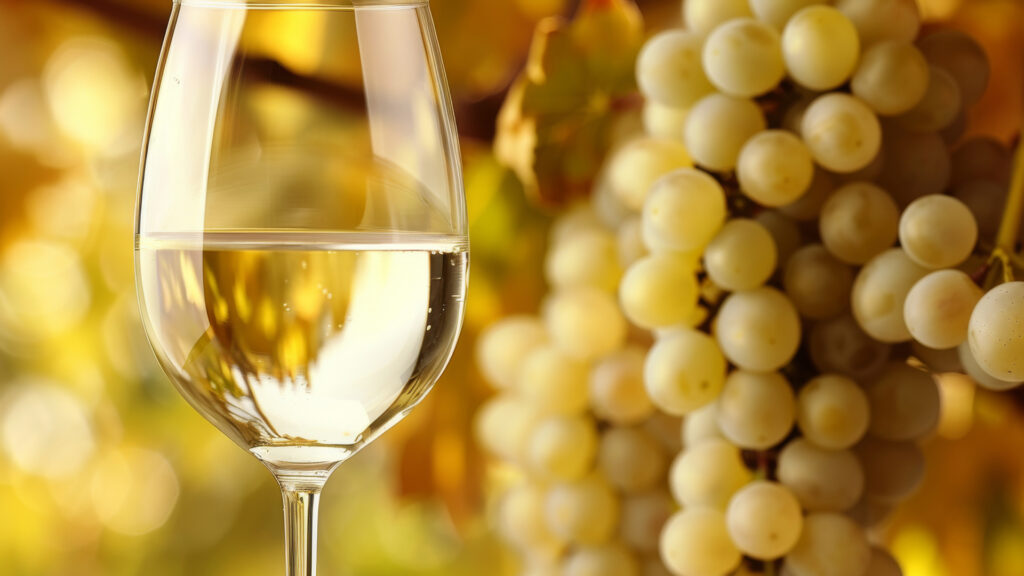
The vintage year plays a greater role in Chasselas than is often assumed. Cooler vintages emphasize freshness and tension, while warmer vintages bring more volume and maturity. Both styles have a lasting impact on the character of the wine.
High-quality Chasselas wines develop positively over several years. As they mature, secondary aromas such as honey, nuts and fine herbs come to the fore. The wines gain depth without losing elegance.
Chasselas wine and food: raclette, fondue and more
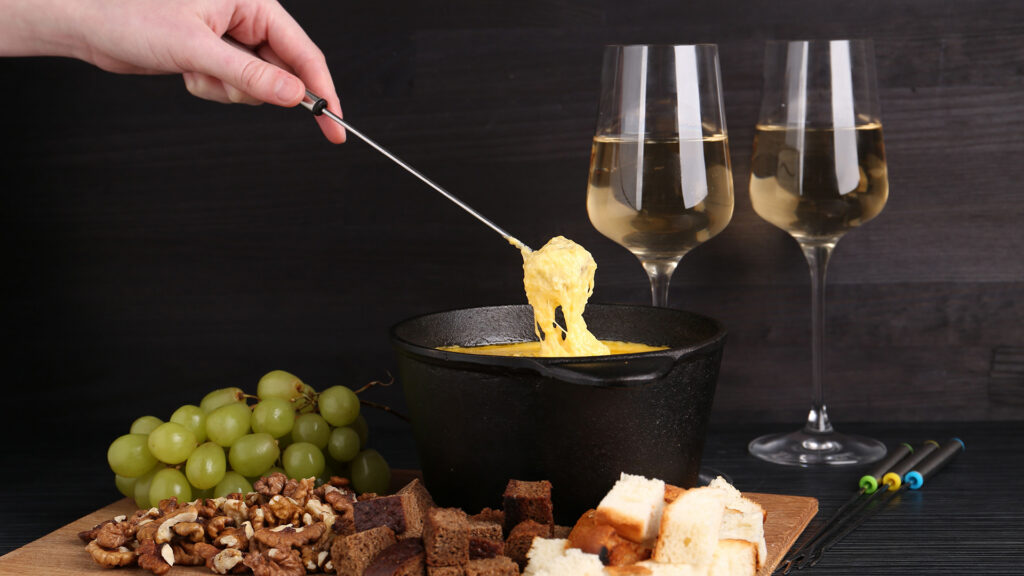
Chasselas is one of the most versatile food companions in the wine world. It is classically served with raclette and fondue, where its mild acidity and freshness perfectly balance the cheese. Cheese fondue also benefits from the wine’s restrained structure.
Chasselas is also an excellent accompaniment to freshwater fish such as whitefish or perch. The fine aroma does not mask the fish, but emphasizes its freshness. The wine is also harmonious with cold meat dishes, poultry, asparagus or mildly spiced dishes. Even as an aperitif wine, Chasselas impresses with its flow and lightness.
Chasselas in comparison with other grape varieties
Compared to more aromatic white wine varieties such as Pinot Gris, Heida or Malvasia, Chasselas is much more restrained. It lacks the pronounced acidity of some alpine varieties, but scores with balance and accessibility.
In combination with Pinot Noir, Chasselas is the ideal companion. Both grape varieties share a certain restraint and a strong awareness of terroir.
Mondial du Chasselas and international perception
The Mondial du Chasselas has made a significant contribution to highlighting the diversity and quality of this grape variety. It shows how differently Chasselas can be interpreted depending on the region, location and style.
This platform strengthens the international awareness of Chasselas without jeopardizing its regional roots. Quality is defined here by precision, not volume.
Significance for the Swiss wine world
Chasselas is indispensable for the Swiss wine world. It connects regions, generations and culinary traditions. As an everyday wine, as a food companion and as an ambitious single-vineyard wine, it fulfills different roles at the same time.
Their importance lies not in international rankings, but in consistency, identity and cultural continuity.
Chasselas as a silent reference
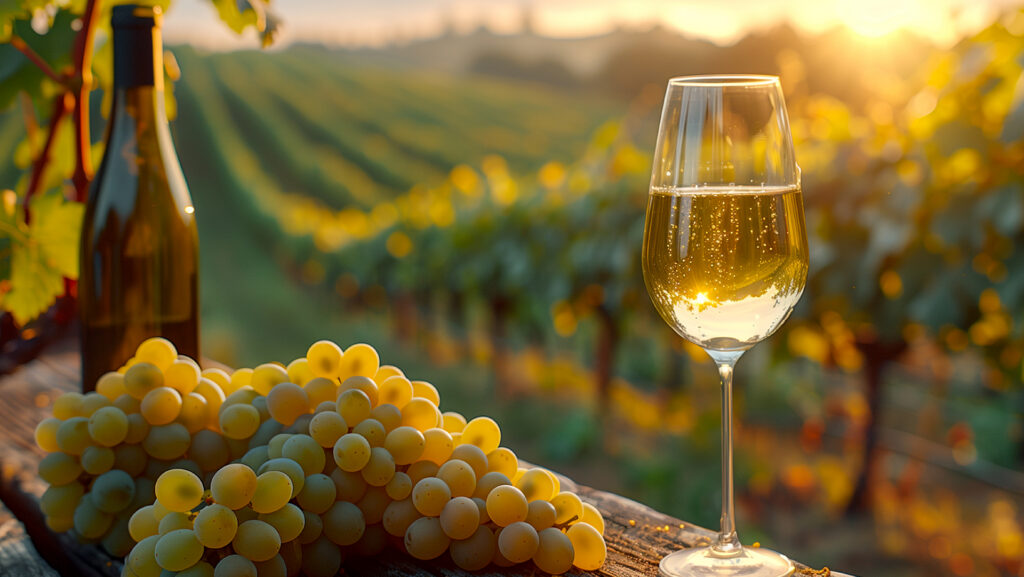
In a wine world that often focuses on intensity and expressive aromas, Chasselas is deliberately quiet. It is precisely this restraint that makes it timeless. It shows that enjoyment does not have to be loud to have a profound effect.
Chasselas is a silent reference because it makes origins visible without explaining them. It relies on context rather than effects. And this is precisely where its lasting power lies.
Frequently asked questions (FAQ) about the Chasselas grape variety
What exactly is Chasselas?
Chasselas is a traditional white wine grape variety that is particularly widespread in Switzerland and is known for its terroir character.
Is Fendant the same as Chasselas?
Yes, Fendant is the common name for Chasselas in Valais.
What dishes does Chasselas go best with?
Chasselas is an excellent accompaniment to raclette, fondue, freshwater fish and light dishes.
Does Chasselas have ageing potential?
High-quality Chasselas wines can mature for several years, gaining depth and complexity in the process.