

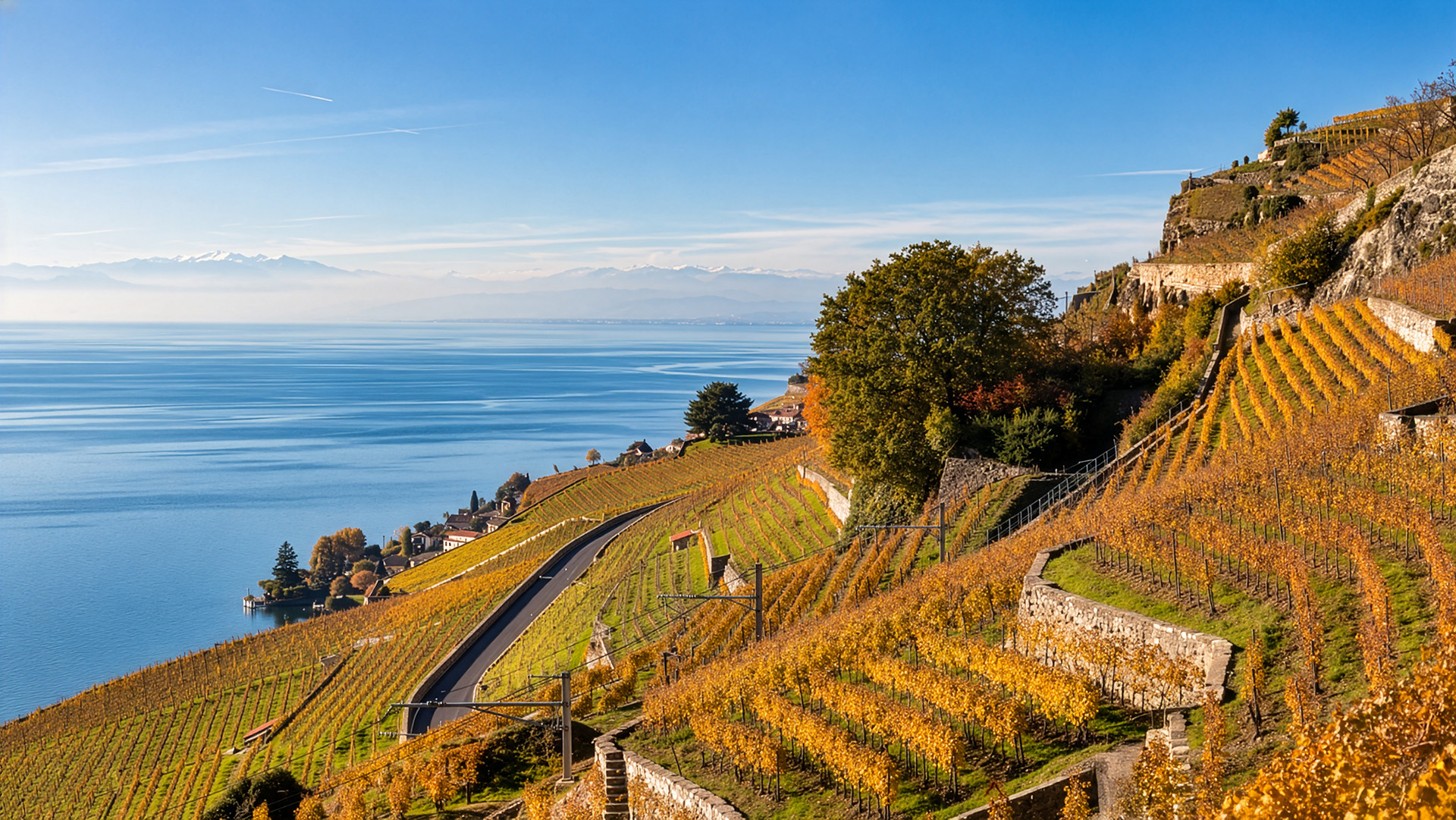
History of Winemaking in Lavaux
Winegrowing in Lavaux dates back to Roman times, when the first vines were planted on the slopes above Lake Geneva. However, the region’s true boom began in the 11th century: Benedictine and Cistercian monks systematically built terraces to cultivate the steep slopes. The influence of Christ and the region’s Christian heritage are still reflected today in the numerous medieval churches and traditions of Lavaux.
Using the simplest of means, they laid the foundation for today’s cultural landscape. Over the centuries, the winemaking families in the villages and hamlets—such as Lutry, Epesses, Riex, and St-Saphorin—developed a unique understanding of the soil, climate, and vine cultivation.
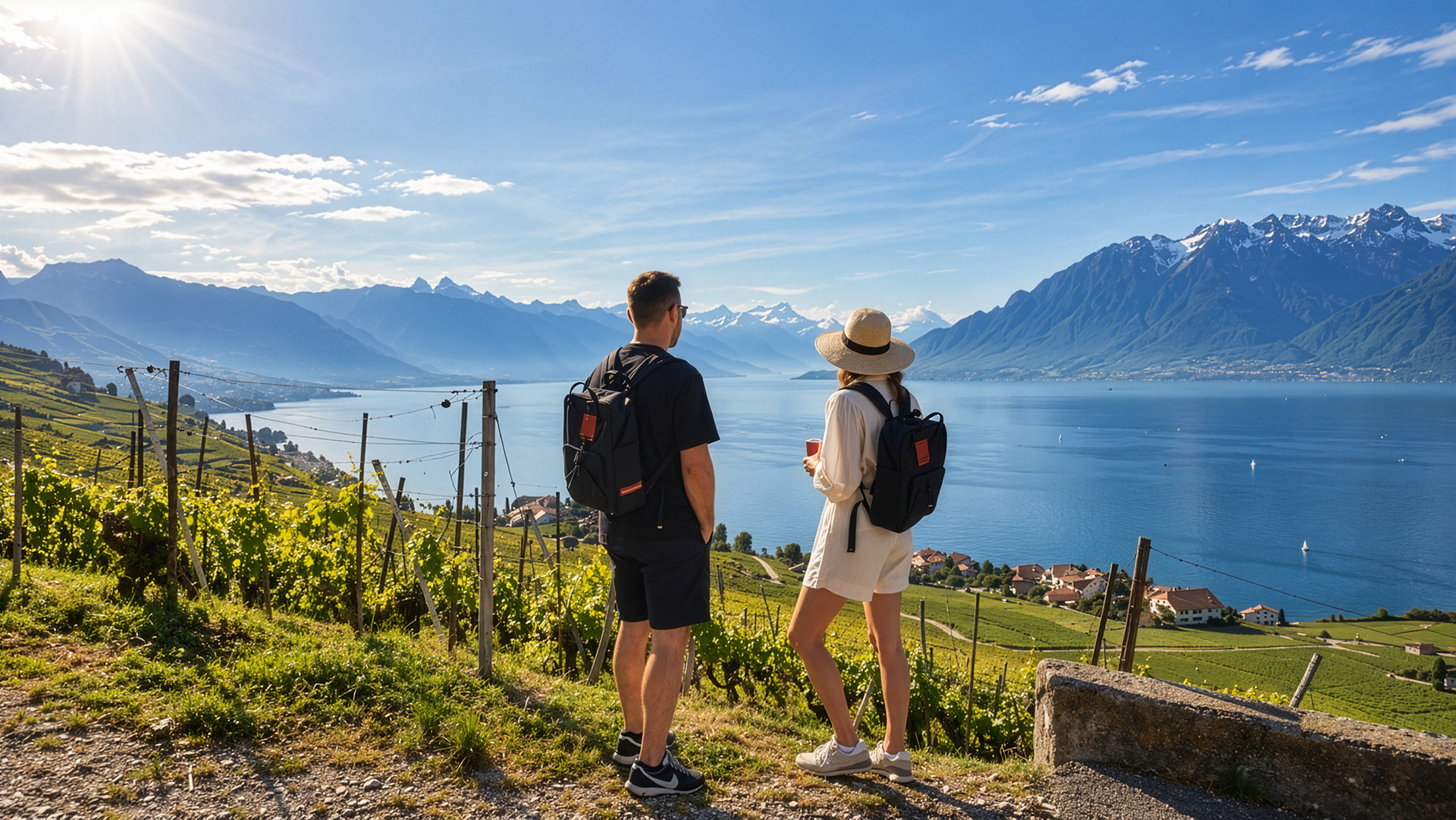
© Swiss Wine (including cover photo) — Lavaux benefits from the three “magical suns”: the sun, the reflection off the lake’s surface, and the walls, which release stored heat
Each generation has played a part in preserving and improving the steep vineyards. Even today, every stone wall and every vineyard plot bears witness to this long tradition and the close connection between viticulture and life.
Lavaux as a UNESCO World Heritage Site
In 2007, Lavaux was inscribed on the UNESCO World Heritage List. This distinction recognizes the harmonious interplay between people and nature that has developed over more than 800 years.
The exhibition at the Maison Lavaux Information Center offers insights into the region’s cultural landscape and history, vividly presenting its unique features, winemaking traditions, and the significance of its UNESCO World Heritage status.
The region is a prime example of how sustainable management and cultural identity can go hand in hand. Here, winemaking is seen not just as a profession, but as a way of life.
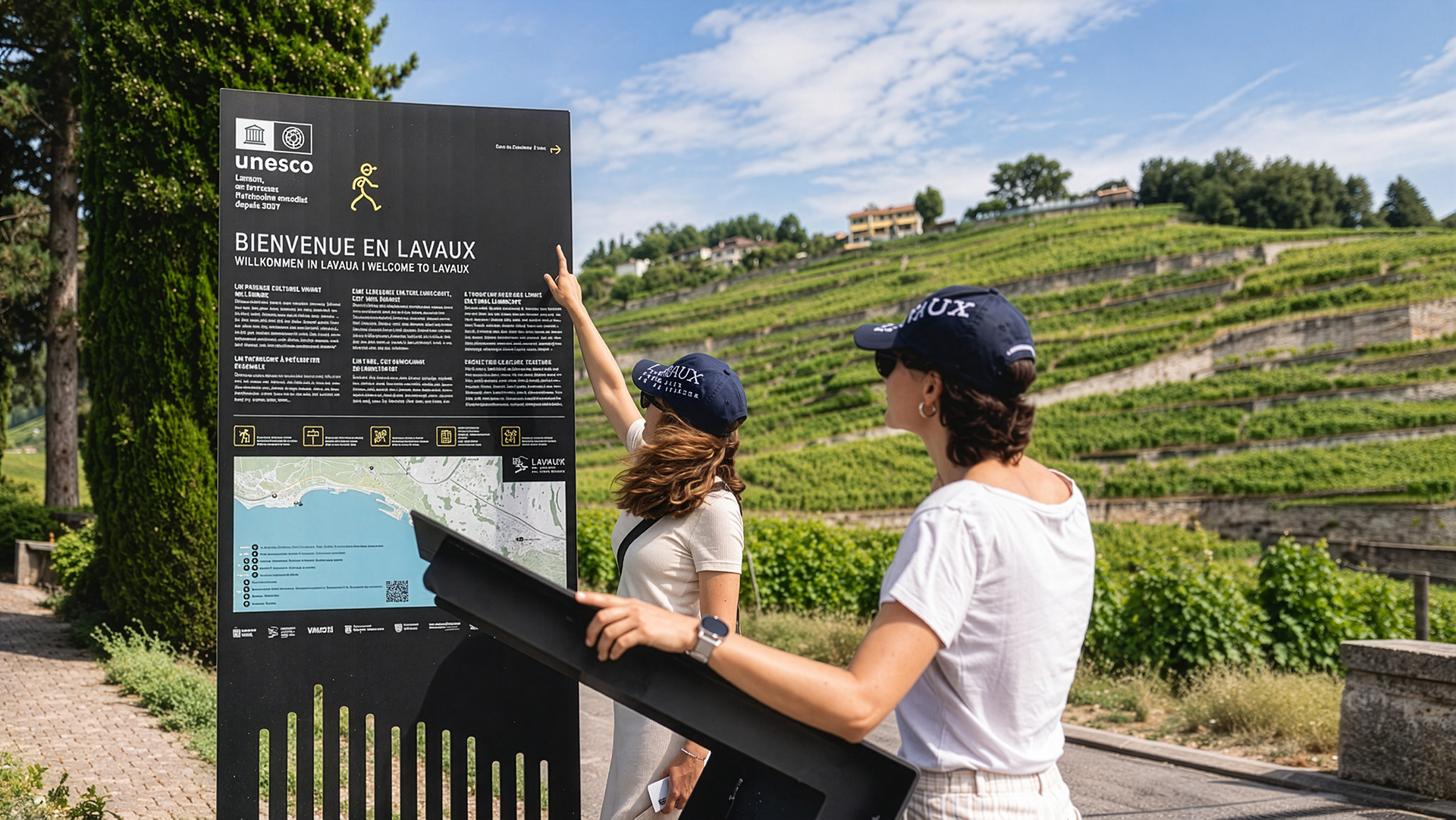
© Association Lavaux Patrimoine mondial, Grandvaux
The Lavaux Wine Region – Where Nature and Culture Converge
The Lavaux wine region is one of the most impressive wine-growing landscapes in Europe. Spanning approximately 800 hectares of vineyards, this spectacular wine-growing region stretches between Lausanne and Vevey along Lake Geneva—or, as the locals say, Lac Léman—nestled in a unique setting of lake, mountains, and unspoiled nature.
The steep vineyard terraces are a masterpiece of human creativity. These vineyard terraces continue to play a defining role in the landscape of Lavaux to this day. Over generations, they have been reinforced with stone walls, maintained, and expanded. The distinctive nature of viticulture and the landscape in Lavaux is reflected in the diversity of cultivation methods and the unique cultural landscape. Today, they are the heart of Vaud’s wine culture and a symbol of the harmonious interplay between nature, craftsmanship, and history. Since 2007, Lavaux has been a UNESCO World Heritage Site and is under international protection.
Geography and Climate – Three Suns for the Wine
Lavaux is located in the canton of Vaud, nestled between the Vaud Alps and the eastern shore of Lake Geneva. This location ensures a particularly mild climate, which winemakers affectionately refer to as “the three suns”:
- The direct sunlight that shines on the slopes all day long.
- The reflection of light off the lake, which provides the vines with additional energy.
- The warmth of the stone walls, which store the sun’s rays and release them again at night.
The intense sunlight, enhanced by these three suns, is crucial for the optimal ripening of the grapes and shapes the character of the wines from Lavaux.
This natural combination promotes even ripening of the grapes and gives the wines a harmonious balance between freshness and body. The soils consist of clay, limestone, and marl, which lend the wines their characteristic minerality and structure.
The Rhône Glacier, which covered the Lavaux region during the Ice Ages, played a decisive role in shaping today’s landscape—with its steep terraces and unique microclimate—as it retreated about 15,000 years ago.
The Significance of the Vineyard Terraces
The imposing vineyard terraces are the hallmark of Lavaux. Approximately 10,000 kilometers of stone walls support the steep slopes—a structure of human perseverance that is unique in the world.
The terraces have been maintained, renovated, and expanded over the centuries. They prevent erosion, retain heat, and create a variety of microclimates that often differ within just a few meters. The terraces divide the landscape into different areas, each with its own microclimate. These differences shape the diversity of Lavaux wines.
Maintaining the terraces is done by hand: Winemakers and their helpers spend countless hours each year repairing walls and pruning vines. The result is a landscape that is as beautiful as it is functional.
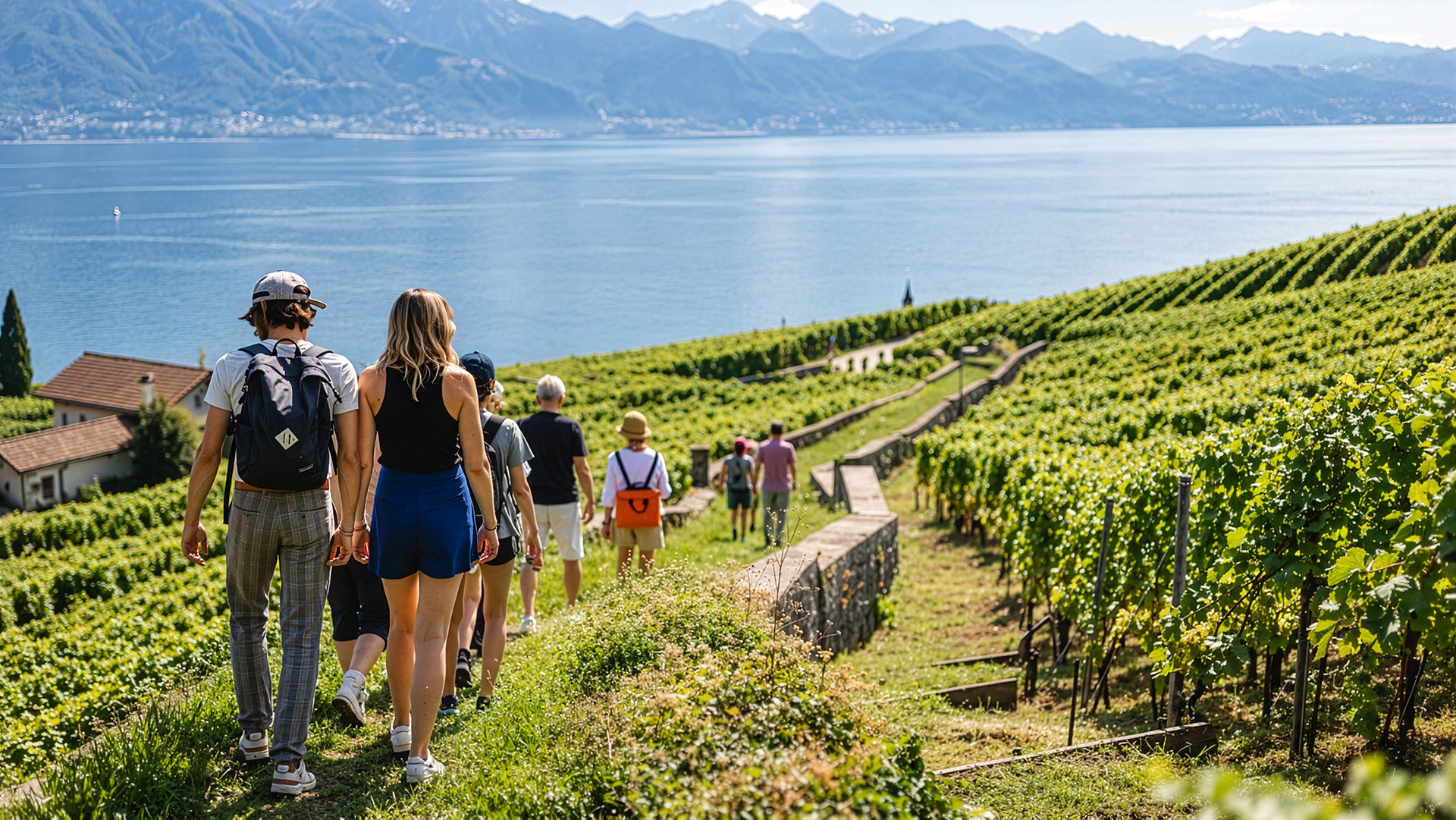
© Association Lavaux Patrimoine mondial, Grandvaux
The Role of Lake Geneva
Lake Geneva plays a central role in the Côtes de la Lavaux wine-growing region. Its surface reflects sunlight and helps regulate temperature. In summer, it prevents overheating; in winter, it protects the vines from frost.
These stable climatic conditions ensure slow, harmonious grape ripening—a key factor in the wines’ elegance. In addition, the proximity to the water lends the wines an unmistakable freshness and clarity.
Wine-growing villages between the lake and the mountains
Numerous wine-growing villages dot the approximately 30-kilometer-long slopes, shaping the character of the region: Lutry, Villette, Epesses, Chexbres, Chardonne, and, of course, St-Saphorin.
Every village has its own wine traditions, festivals, and specialty grape varieties. Visitors can not only discover exceptional wines during a tasting, but also experience the vibrant wine culture firsthand—at village festivals or on hikes along the “Sentier des Vignes,” the well-known wine trail and popular path through the vineyards. The route winds through the terraced vineyards and connects various sights and wineries. Well-marked hiking trails wind through the entire region. As part of a guided tour, you can also explore the vineyards and villages; often, this includes visits to wine cellars, allowing you to experience the region’s cultural and agricultural significance firsthand. A hike like this combines pleasure with relaxation.
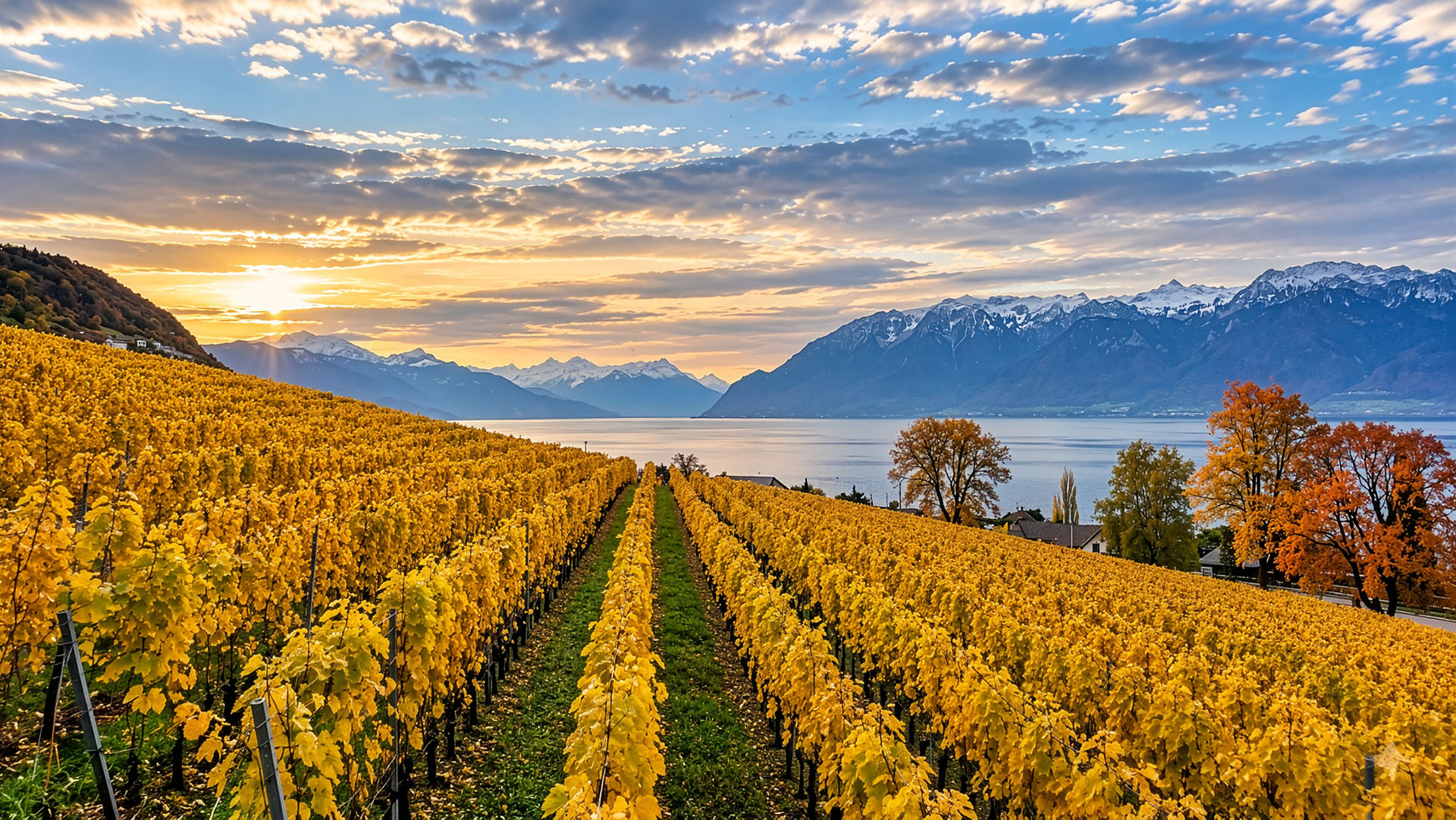
© The Lavaux vineyards and Lake Geneva near Epesses. [Image 1]
St-Saphorin – The Heart of Lavaux
The picturesque village of St-Saphorin is considered the heart of the Lavaux wine-growing region. Its narrow alleys, old cellars, and proximity to the lake give the village a special atmosphere.
The wines from St-Saphorin are full-bodied and well-balanced, with delicate fruit, a lively structure, and a subtle saltiness on the finish—a flavor signature of the local soil. They are among the very best Chasselas wines from the Canton of Vaud.
The Grape Varieties of Lavaux
The main grape variety in Lavaux is Chasselas, which reaches its finest expression here. These white wines are characterized by delicate aromas of linden blossoms, almonds, and citrus, accompanied by an elegant minerality. On the palate, Chasselas is typically fresh, delicate, and subtly fruity.
In addition to Chasselas, Pinot Noir, Gamay, and Merlot are cultivated for red wines. Smaller quantities of Chardonnay, Pinot Gris, and Sauvignon Blanc round out the range.
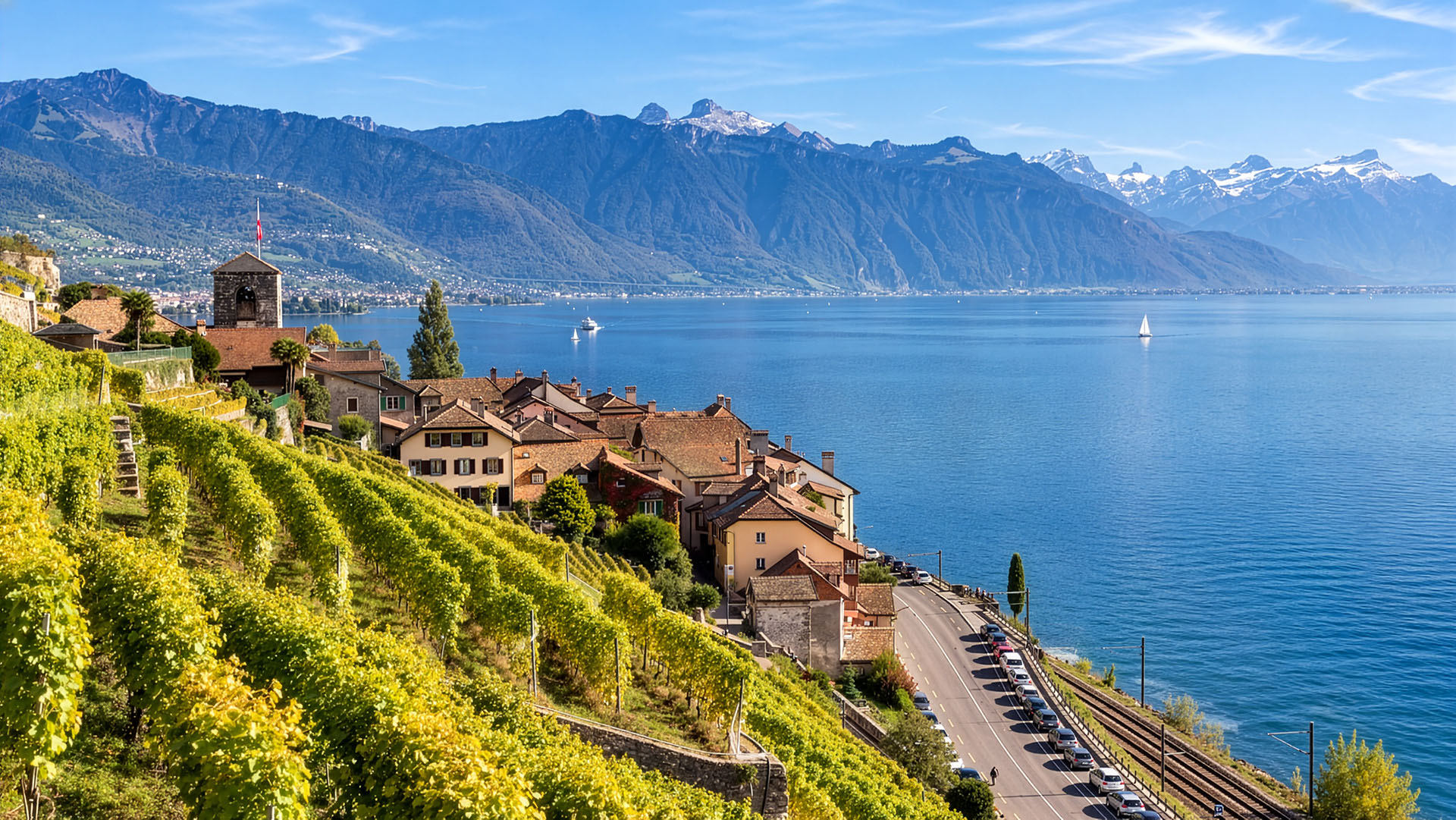
© View of Saint-Saphorin and the Lavaux vineyards on Lake Geneva. [Image 2]
The diversity of grape varieties reflects the region’s varied terroirs: from the clay-rich soils of Epesses to the limestone-rich slopes of St-Saphorin, each vineyard site offers its own distinct character. The distinctive qualities of wines from Lavaux and Chablais are evident in the variety of grape varieties, regional traditions, and the high quality that characterize these wine regions.
Selected winemakers from Lavaux
Les Frères Dubois – Elegance from Cully
The Les Frères Dubois winery in Cully is one of the region’s most renowned estates. For generations, the family has been synonymous with elegance, craftsmanship, and an unmistakable style.
Their Chasselas wines are considered the epitome of the Lavaux tradition: crisp, refined, and expressive. Through precise winemaking and selective harvesting, they produce wines that authentically reflect the vineyard terraces and the climate of Lake Geneva.
Bernard Bovy – Passion and Terroir
The Bernard Bovy winery in Chexbres is deeply rooted in Lavaux. The family has been growing grapes for several generations and is committed to sustainable methods.
Their wines are characterized by depth and structure. The Chasselas is elegant and mineral, while the Pinot Noir is delicately spicy and precise. Both reflect the distinctive character of the soils and slopes.
Bovy is a prime example of the winemakers who blend tradition and innovation without losing the soul of Lavaux.
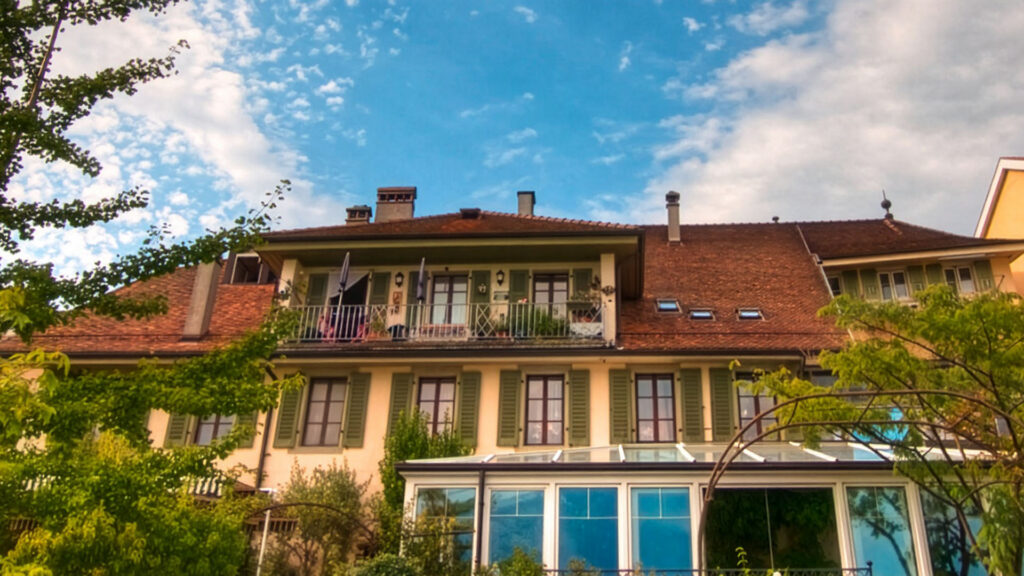
© Bernard Bovy Winery
Wines and Style
Lavaux wines are characterized by balance, minerality, and elegance. Chasselas dominates, but red wines—particularly those made from Pinot Noir and Gamay—are gaining in importance.
The white wines are versatile: fresh and fruity as an aperitif, yet full-bodied enough to pair with cheese or fish dishes. The white wines of Lavaux are particularly well-suited as aperitifs, as they stimulate the appetite and are highly appreciated at festive occasions. They also pair exceptionally well with food. They are considered a classic pairing for fondue. The red wines impress with their finesse and silky tannins.
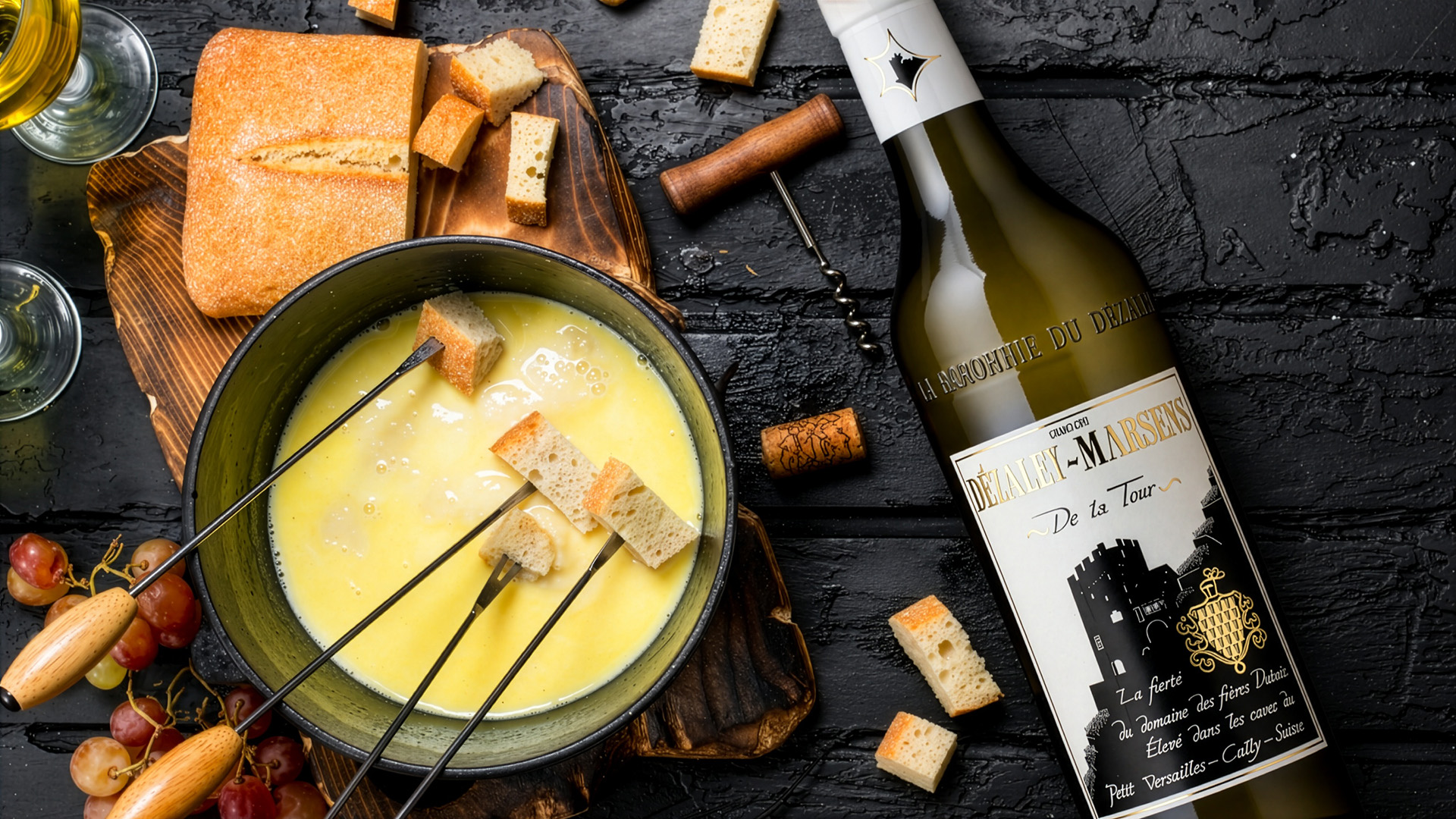
Many wineries vinify their wines in stainless steel tanks to ensure purity and precision, while others use wooden barrels to enhance structure and depth. Wines from Lavaux have won numerous awards, and their price reflects their high quality and the unique tasting experience they offer—which is best appreciated when served in the right glass.
Frequently Asked Questions (FAQ) About the Lavaux Wine Region
What wine-growing areas are there in Lavaux?
Lavaux comprises several subregions, including Lutry, Villette, Epesses, St-Saphorin, Chardonne, Chexbres, and Dézaley. Each offers its own terroir and distinctive wines.
Is Lavaux wine good?
Yes, wines from Lavaux are among the best in Switzerland and are considered an integral part of the Swiss winemaking tradition. Chasselas, in particular, is regarded as a hallmark of quality, elegance, and regional character.
Where is the most beautiful wine region?
Lavaux is considered one of the most beautiful wine regions in Europe, with spectacular terraces in the area and panoramic views of Lake Geneva and the Alps in the background.
Where is the Lavaux region?
Lavaux is located in the canton of Vaud, between Lausanne and Vevey, on the northern shore of Lake Geneva, and stretches all the way toward Montreux. It is part of the larger Vaud wine region and is also easily accessible by train.
Image Source
[Image 1] Photo: Foto-Falk / Wikimedia Commons, CC BY-SA 4.0, edited.
[Image 2] Photo: JoachimKohler-HB / Wikimedia Commons, CC BY-SA 4.0, edited.