

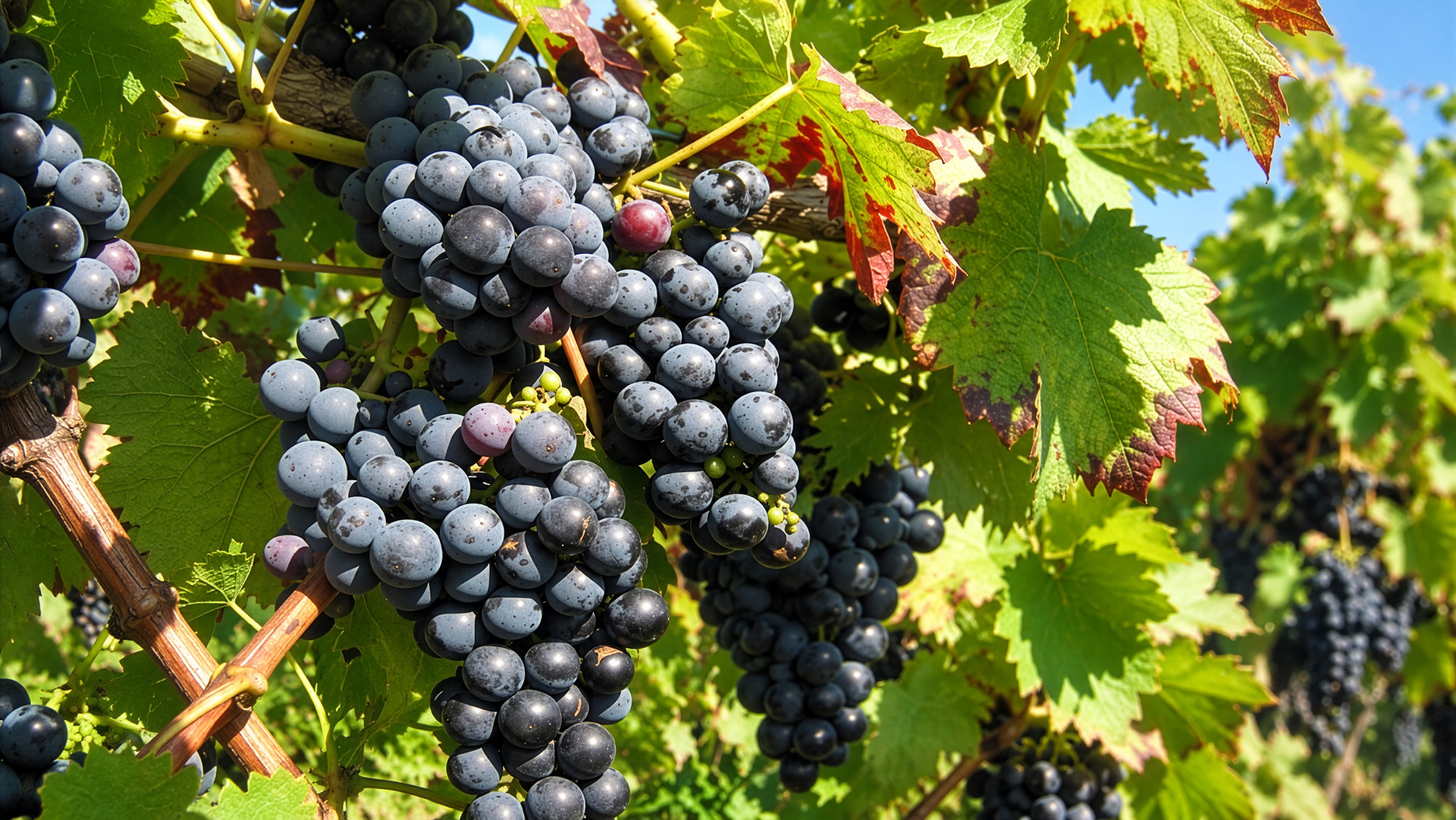
Regent Grape Variety – Origin and Significance
The Regent grape variety is one of the most successful new varieties in European viticulture. Wines made from Regent are characterized by full-bodied reds with intense color, moderate acidity, and distinctive aromas. This variety has become particularly important for quality wine production in cooler wine-growing regions. The first plantings of the Regent grapevine in experimental vineyards began in 1985; plant variety protection was granted in 1993, and it was approved for cultivation in 1996.
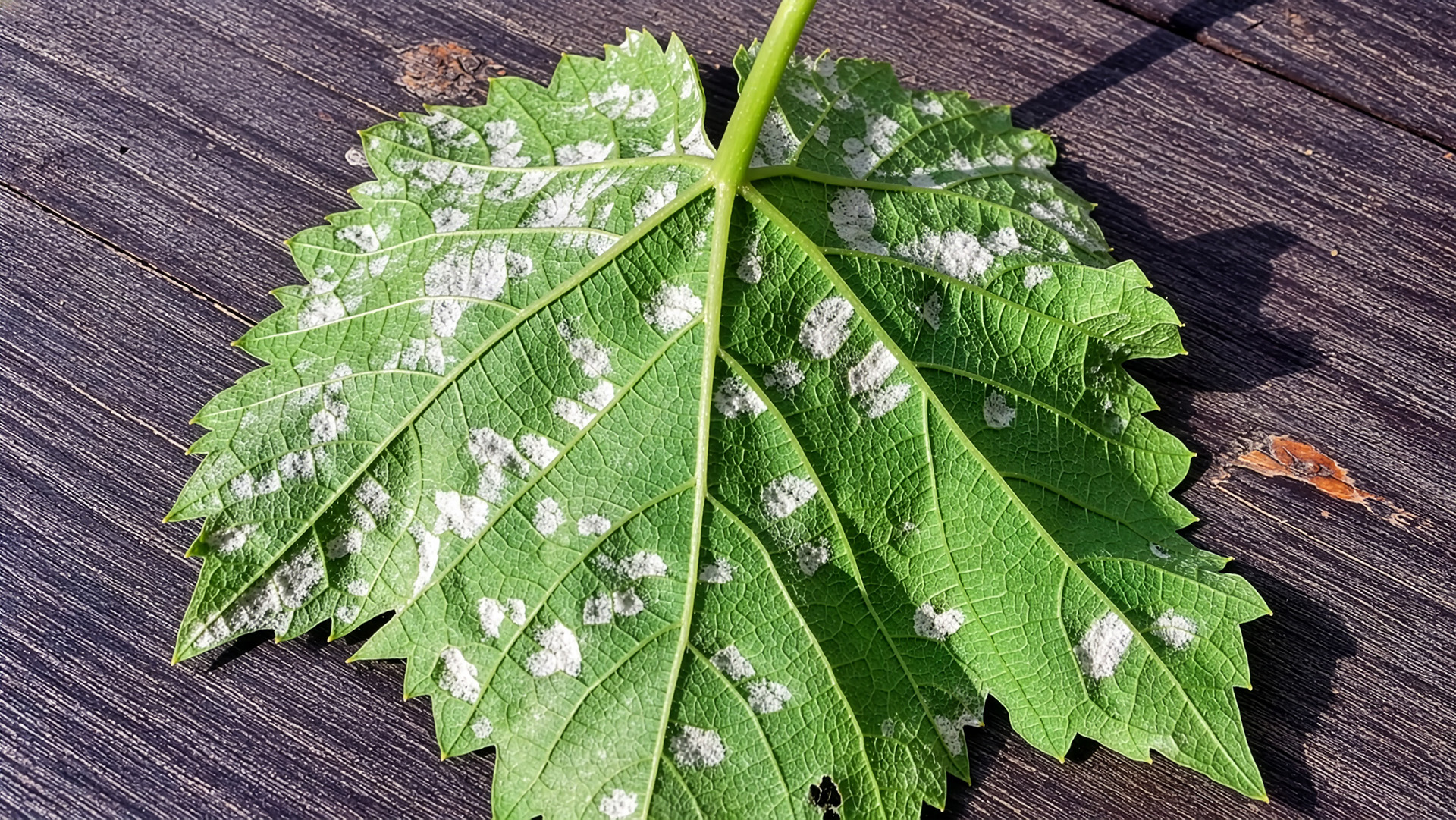
The grape variety has proven to be resistant to diseases such as downy mildew
Compared to traditional European grape varieties, the Regent grape variety is distinguished by its high resistance to disease. This resistance reduces the need for plant protection measures and makes it an attractive option for many winemakers. This red wine grape variety offers significant advantages, particularly in regions with a variable climate or frequent powdery mildew outbreaks. Regent is also known for its high resistance to winter frost, making it particularly well-suited for peripheral locations and colder wine-growing regions. Since the roots of the Regent vine are susceptible to phylloxera, it must be grafted onto phylloxera-resistant rootstocks.
The name “Regent” also has a fascinating origin: it dates back to the famous Le Régent diamond, which was discovered in India in the 18th century. The gem once adorned the coronation crown of Louis XV and later the pommel of Napoleon Bonaparte’s sword—a touch of history and splendor that also lends the grape variety a special aura.
Regions where the Regent grape variety is grown
The cultivation of this variety has expanded significantly in recent decades. Today, Regent wines can be found not only in Germany but also in other European wine-growing regions and, increasingly, in Switzerland. In Belgium, too, significant areas are now planted with Regent. The area planted with Regent has grown steadily since its approval in 1996: In Germany, for example, the planted area rose from 70 hectares in 1997 to 178 hectares in 1998 and now totals around 1,750 hectares.
So it’s no surprise that the most important growing regions for Regent are located in Germany. Larger vineyards planted with this variety can be found particularly in Rheinhessen, the Palatinate, and Baden-Württemberg. The area planted with Regent vines has steadily increased in recent years in Germany and Europe, underscoring the growing importance of this grape variety.
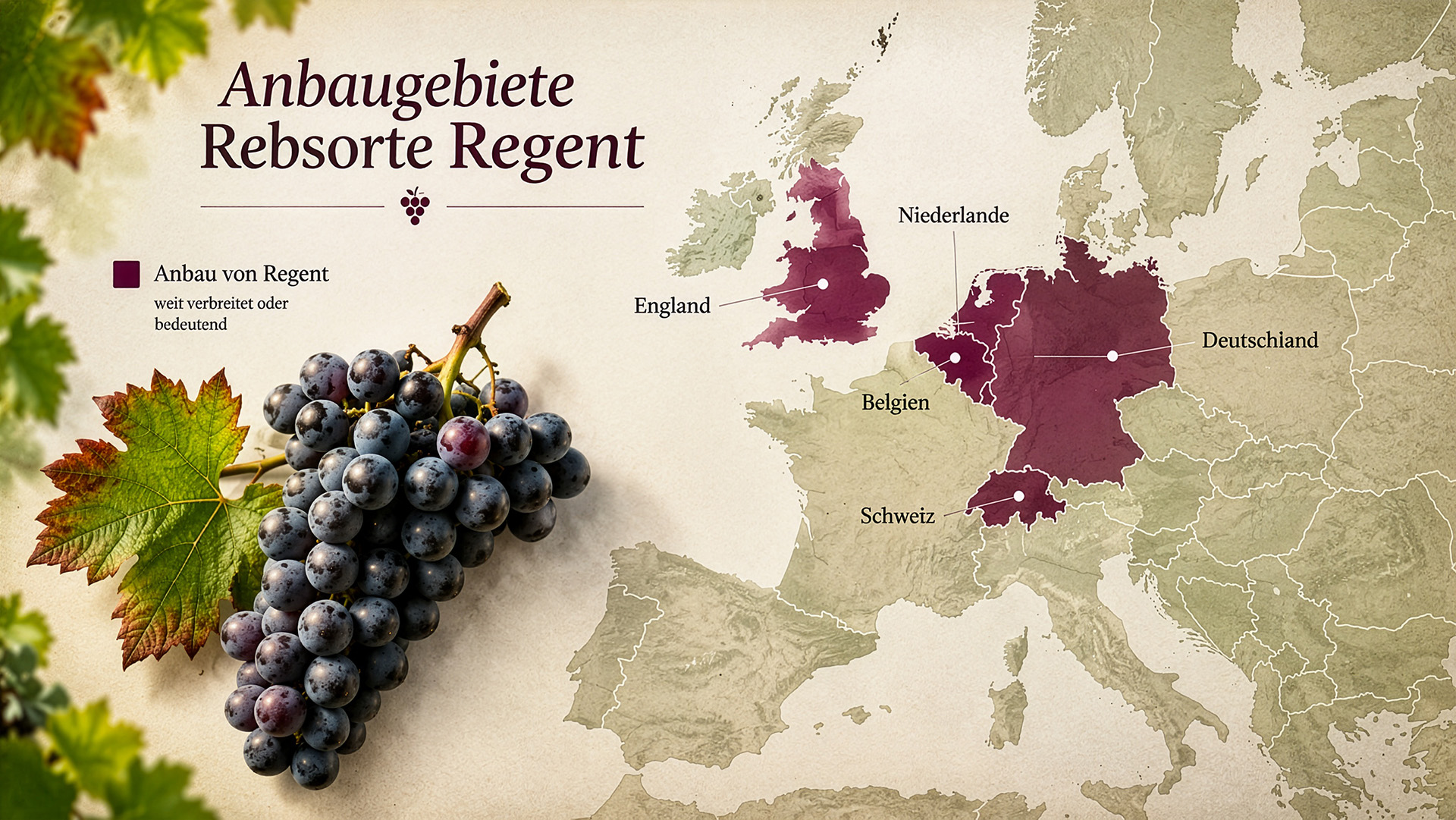
Regent is also increasingly being grown in other regions of Europe. In addition to Germany and Switzerland, Belgium is among the countries where Regent is cultivated on significant areas of land. In Switzerland, the variety is also gaining in importance, as its hardiness aligns well with modern cultivation practices.
High-quality Regent wines often come from the wine-growing regions of Rheinhessen, the Palatinate, and Baden-Württemberg. Although the global area under cultivation is still relatively small, it is growing steadily. The Regent, a newly bred variety, has thus established itself as an important and sustainable grape variety in European viticulture.
The Breeding Work of Dr. Gerhardt Alleweldt
The development of the Regent grape variety is closely linked to the work of Dr. Gerhardt Alleweldt. Regent is considered a significant new variety that was specifically developed for modern, sustainable viticulture. At the Geilweilerhof Institute for Grapevine Breeding in Siebeldingen, he developed this variety as part of a comprehensive grapevine breeding program aimed at producing resilient vines.
The cross was created as early as 1967. The goal was to develop a red wine grape variety that offered both high quality and strong disease resistance. The scientific basis for this breeding program established the Geilweilerhof Institute for Grapevine Breeding as a major center for modern grapevine research.

Gerhardt Erich ALLEWELDT —Prof. Dr. Dr. h.c., graduate in agriculture. Born July 21, 1927, in Brightview, Canada; died March 28, 2005, in Landau-Godramstein.
Starting in 1985, the first Regent grapevines were planted at viticultural research stations. Plant variety protection for Regent was granted in 1993, and official variety approval in Germany followed in 1996. Just one year later, the grape variety was also approved at the European level.
Crossing Partners and Genetic Origins
The Regent grape variety was developed through a cross between several vine lines. An important parent variety is Diana, which in turn has genetic ties to traditional European grape varieties.
Chambourcin is also among the variety’s genetic ancestors. This combination gives Regent a blend of hardiness, good ripening characteristics, and aromatic diversity.
The grape’s origins demonstrate how modern grape breeding seeks to combine traditional wine quality with the requirements of sustainable viticulture.
Characteristics of the Regent Grape Variety
Growth and Ripening Period
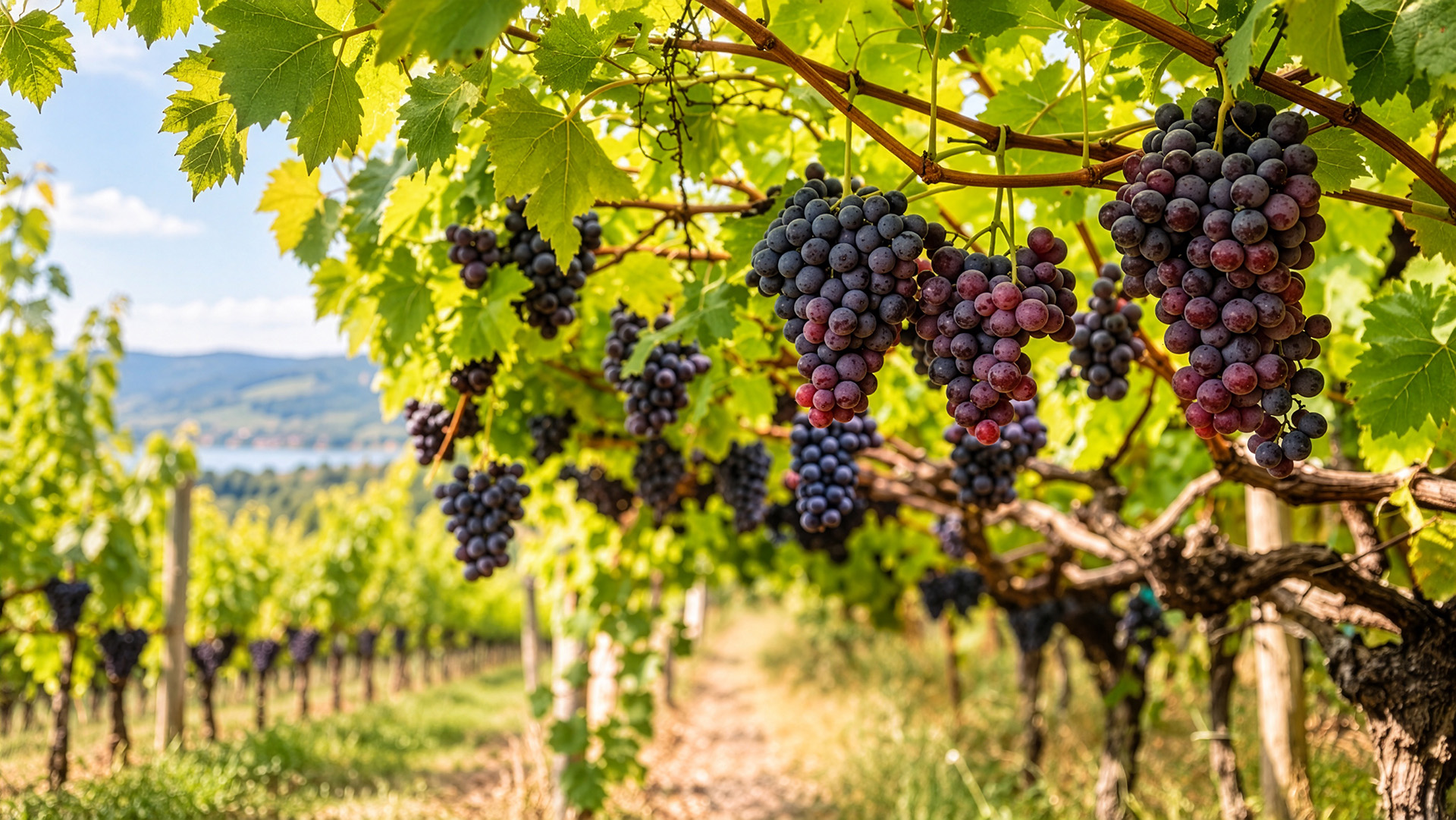
The vine exhibits vigorous growth and produces sturdy shoots and relatively large leaves. The clusters are medium-sized and consist of tightly packed berries with dark skins.
The ripening period is usually around mid-September, which is slightly earlier than that of Dornfelder. Regent is often compared to Dornfelder, as both varieties are known for their high pigment content and intense color.
Depending on the vintage, the must weight can be relatively high, which gives the wine good structure and a full body.
Disease resistance
One of the most important characteristics of the Regent grape variety is its resistance to powdery mildew. This natural resistance reduces the need for intensive pest control measures. However, Regent is not resistant to phylloxera, which is why the vines must be grafted onto phylloxera-resistant rootstocks.
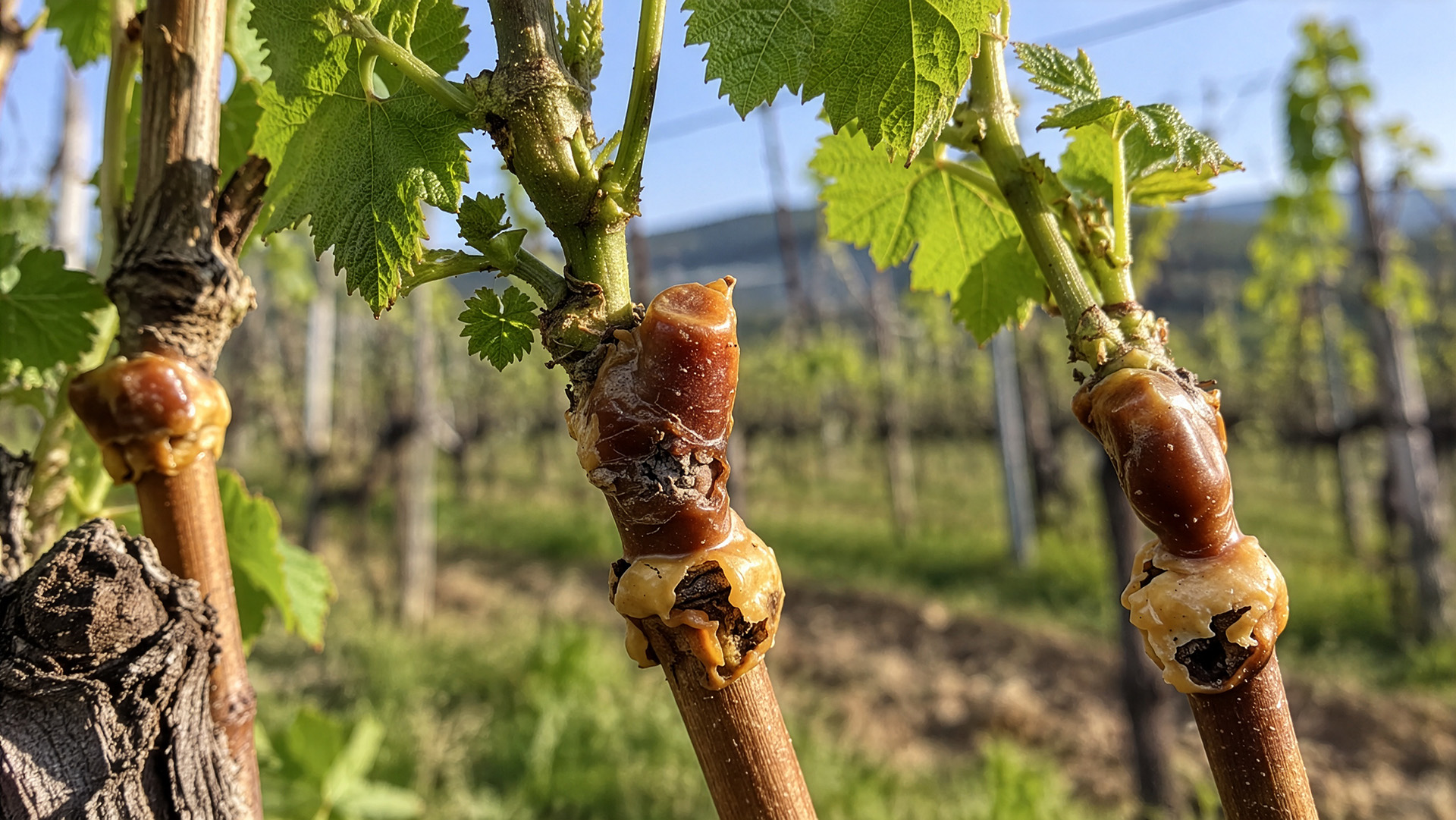
Grafting the vines protects them against phylloxera infestation.
This variety also shows relatively good resistance to Botrytis. As a result, the grapes often remain healthy on the vine for longer.
These characteristics make Regent an important variety for sustainable viticulture.
Suitable Locations and Soils
It thrives particularly well in sunny locations with well-aerated soils. Regent is also ideally suited for so-called “red wine fringe areas”—that is, vineyard sites on the edges of valleys or plateaus with specific climatic or soil conditions. In windy locations, however, flower drop may occasionally occur.
Many winemakers therefore recommend sheltered vineyards with sufficient warmth. Such conditions promote the full ripening of the grapes and improve the quality of the wines.
The Style and Aromas of Regent Wine
Color and Structure
Regent wine is known for its exceptionally dark color. This intense color is due to a high concentration of pigments in the grape skins. In particular, the high content of malvidin, a pigment, is responsible for the characteristic deep, dark color of Regent wine.
In the glass, these red wines often display a deep, dark color with violet highlights. The tannins are usually distinctly noticeable but remain well-integrated.
The body is full-bodied without seeming heavy.
Typical aromas
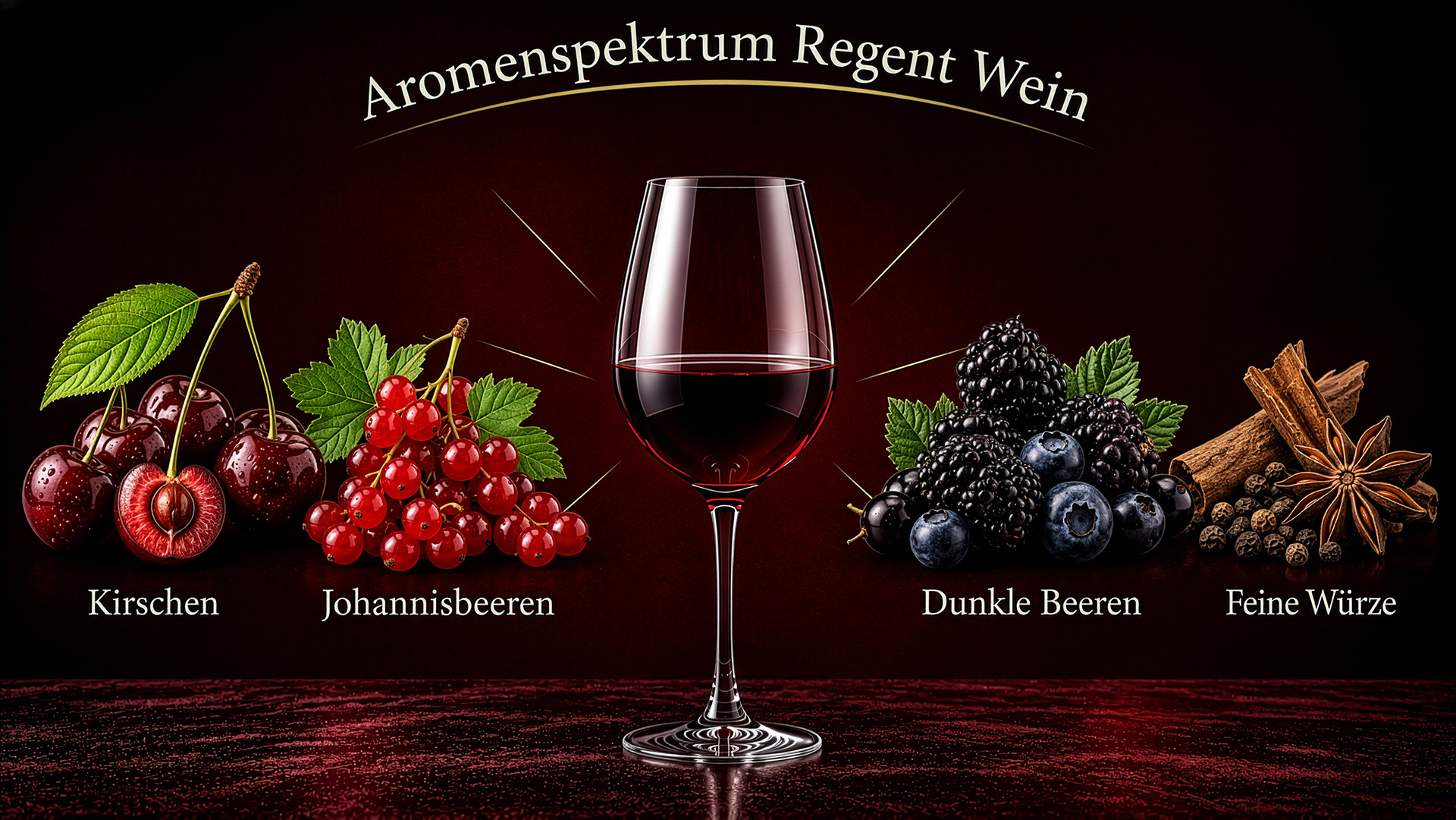
Regent’s aroma is fruity, dark, and spicy. Notes of ripe cherries, black currants, blackberries, and other dark wild berries are particularly common. Depending on the ripeness of the grapes, hints of plums may also be present. The intense fruitiness complements the deep, dark color characteristic of Regent wines.
In addition to its fruitiness, Regent usually has a subtle spicy character. Herbal nuances, subtle hints of spice, and occasionally slightly earthy undertones lend the wine additional depth. When Regent is aged in wooden barrels, aromas of vanilla, toasty notes, or dark chocolate may develop. The intensity of these notes depends heavily on the duration and type of barrel aging.
On the palate, Regent is typically robust and full-bodied, with noticeable but usually well-integrated tannins. Its moderate acidity often makes the dark fruit flavors seem particularly rounded. Depending on the aging process, the finish can be soft and fruit-forward, or—in the case of more robust versions—spicier and more structured. Thus, the stylistic spectrum ranges from uncomplicated, early-drinking red wines to more full-bodied Regent wines with greater depth and aging potential.
Aging and Maturation Potential
Many Regent wines are generally meant to be enjoyed young, as their fruit flavors are accessible early on and they typically have moderate acidity. Nevertheless, high-quality examples can also develop a certain aging potential.
Aging in oak barrels rounds out the tannin structure and lends the wine additional structure and depth. In such cases, the wine gains complexity and elegance.
Regent Wine as a Food Pairing
Regent wine is an excellent pairing for hearty, robust dishes. Its intense color, pronounced tannic structure, and fruity aromas harmonize particularly well with spicy dishes. Regent truly comes into its own when paired with meat dishes featuring rich sauces, such as leg of lamb or oxtail ragout.
This red wine pairs very well with pan-seared or grilled meat. Beef, lamb, or game dishes complement the fruity aromas of cherries and dark berries particularly well. Roast venison and wild boar, in particular, are excellent game dishes that pair perfectly with Regent.
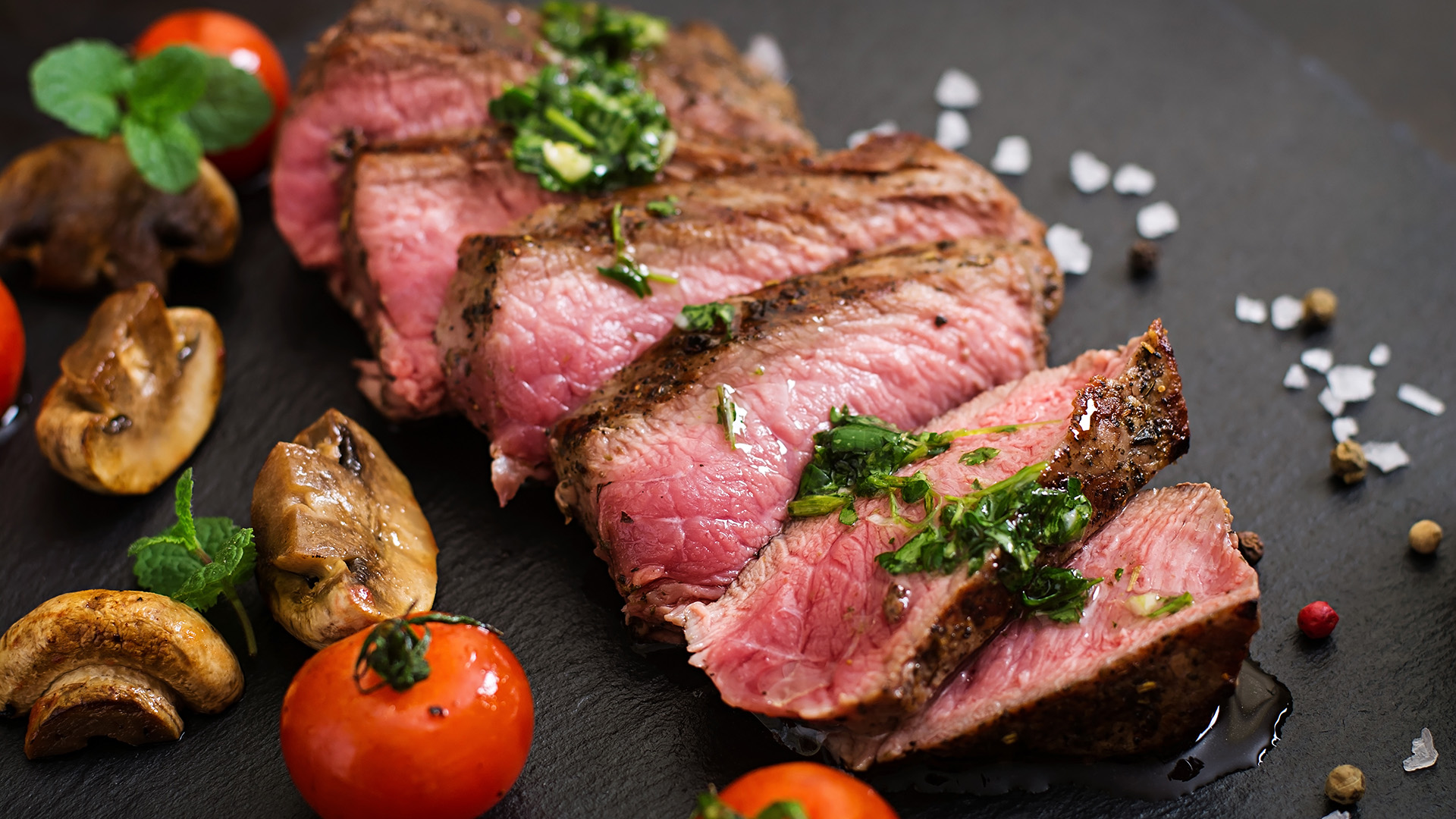
Regent also pairs exceptionally well with classic Central European dishes. A hearty roast, braised beef shoulder, or game ragout bring out the wine’s character.
In addition, Regent pairs well with aged cheeses. Hard cheeses and spicy semi-hard cheeses, in particular, create an intriguing contrast to the wine’s fruity notes.
This red wine can even be an interesting pairing for rustic dishes like mushroom stir-fries or hearty vegetable dishes. Hearty pasta and pizza dishes—especially pasta with tomato and meat sauce—also pair exceptionally well with Regent.
Frequently Asked Questions (FAQ) About the Regent Grape Variety
What kind of grape variety is Regent?
Regent is a modern red wine grape variety from Germany. It was developed at the Geilweilerhof Institute for Grapevine Breeding and is characterized by high disease resistance and an intense color.
What does Regent wine taste like?
Regent wines often display aromas of cherries, dark berries, and sometimes spicy notes. The wine typically has a full body and a well-structured tannin profile.
Where is the Regent grape variety grown?
The main growing regions are in Germany, particularly in Rheinhessen and the Palatinate. Regent is also increasingly cultivated in Switzerland and other European wine regions.
Why is Regent considered a hardy grape variety?
The Regent grape variety has a natural resistance to diseases such as powdery mildew. As a result, fewer plant protection measures are required, making it particularly appealing for sustainable viticulture.