

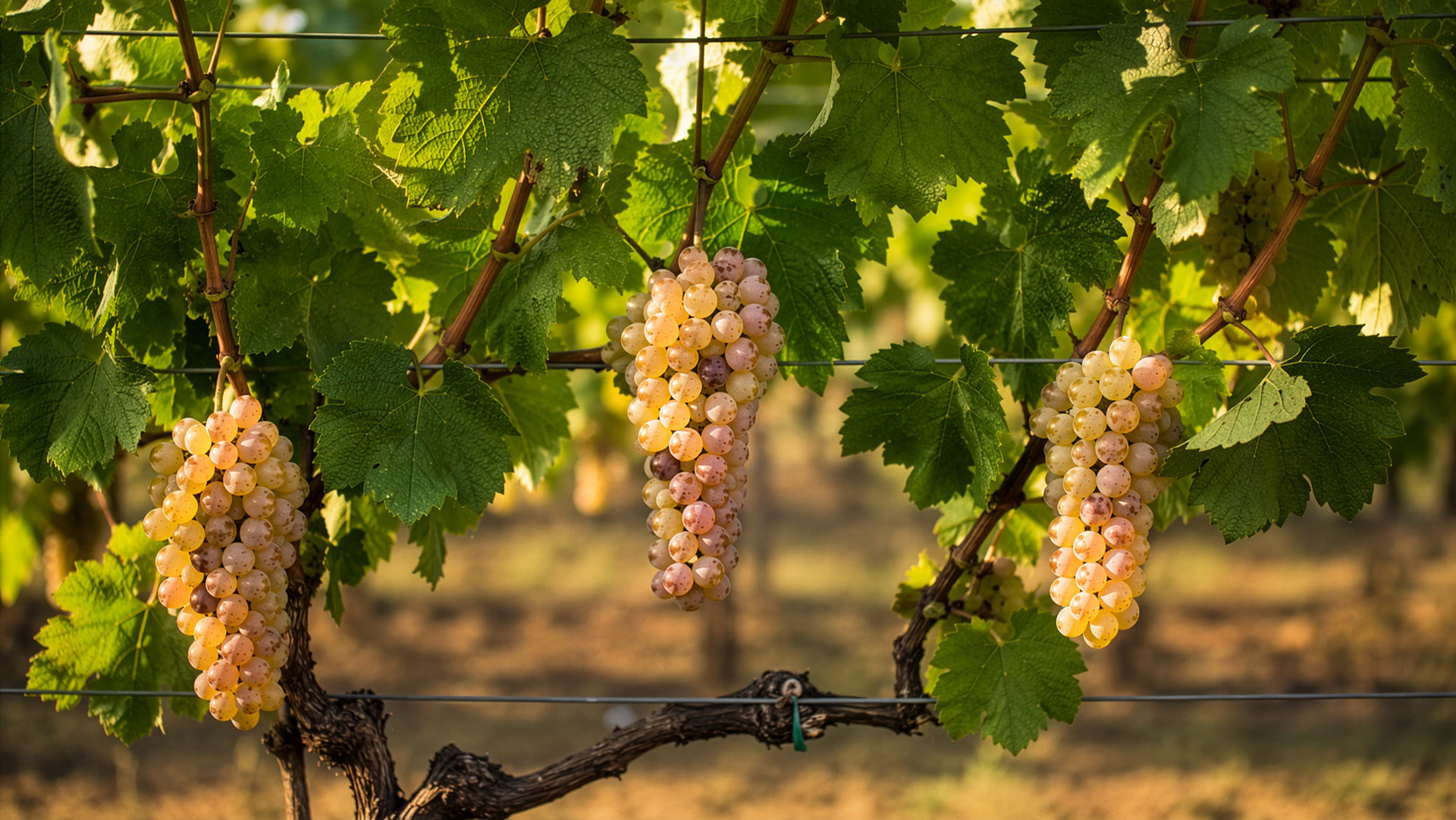
Sauvignac – A New PIWI Variety from Switzerland
Sauvignac is a modern, fungus-resistant PIWI grape variety from Switzerland, developed from a cross between Sauvignon Blanc, Riesling, and resistant components of the Amur grapevine, with the goal of enabling the production of high-quality wines while significantly reducing the use of pesticides. For wine lovers and viticulture experts in Switzerland, this variety is particularly interesting because it directly combines quality, freshness, and sustainability in modern viticulture.
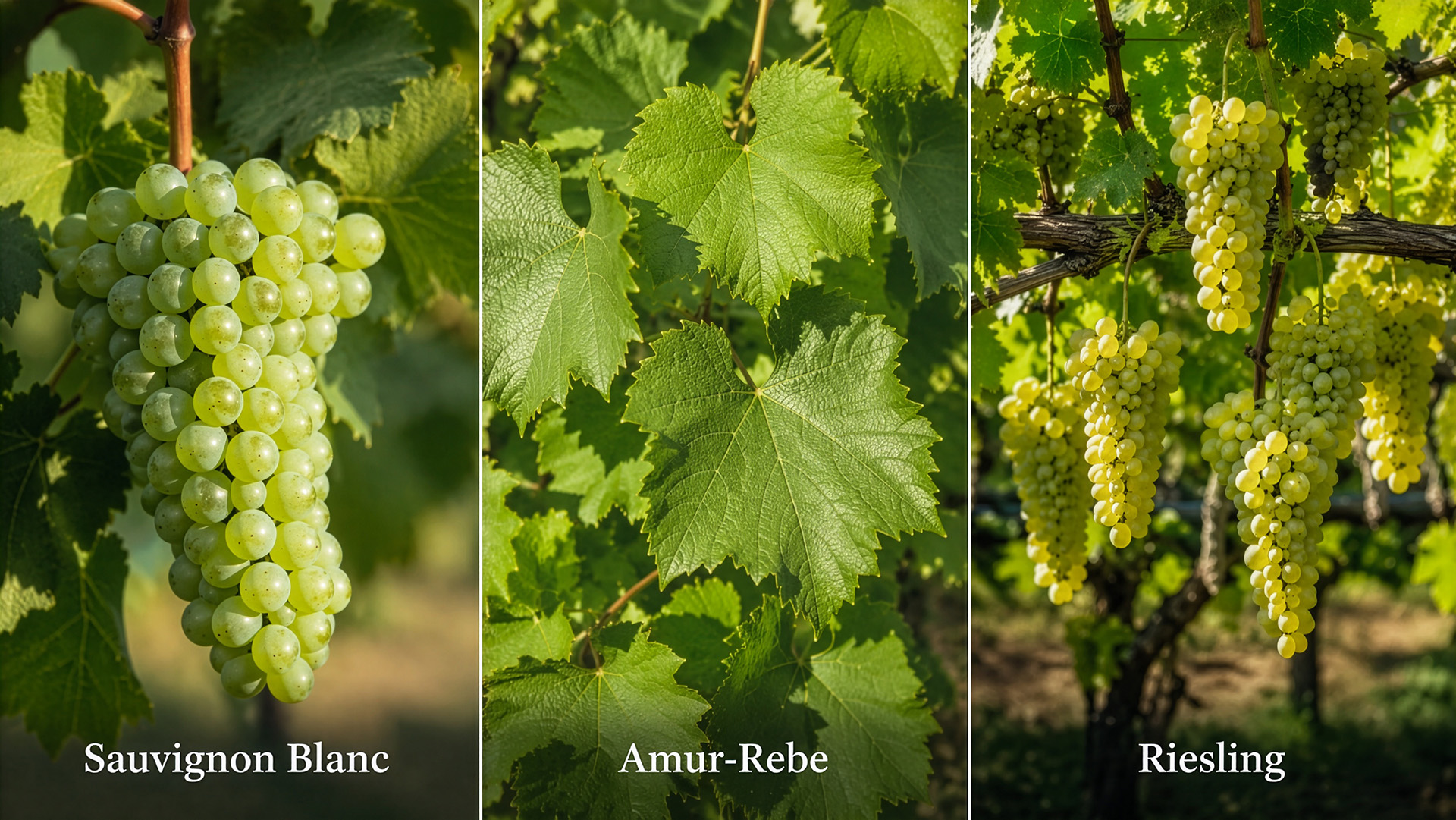
Sauvignac is a hybrid of Sauvignon Blanc, Riesling, and the wild grape variety Amur
As a PIWI grape variety, Sauvignac combines the characteristics of classic Vitis vinifera varieties with a pronounced resistance to fungal diseases such as downy mildew and powdery mildew. At the same time, its flavor profile remains close to that of well-known European grapes, so the wines come across as familiar, fresh, and precise on the palate. Anyone interested in sustainable grape varieties, innovative breeding, and aromatically distinct white wines will find the most important basics concisely summarized here.
The breeding number Cal 6 04 is an important indicator of this grape variety’s origin among experts. It belongs to the so-called Cal series and is sometimes also referred to as VB Cal 604. The following sections cover its origin and breeding, resistance characteristics, vine behavior, the wines’ aromas, suitable food pairings, and the significance of Sauvignac for more environmentally friendly viticulture.
Valentin Blattner and the Cal 6 04 variety
Swiss grape breeder Valentin Blattner is the man behind the Sauvignac grape variety. His work in the Swiss canton of Jura has produced a new generation of PIWI grapes. The hybrid, with the breeding number Cal 6 04, was developed in Soyhières, a small town in the Jura.
The genetic makeup of this variety is particularly interesting. Its parent vines are Sauvignon Blanc and Riesling, two of the best-known European winegrapes. This genetic foundation is supplemented by genes from Vitis amurensis—the Amur grapevine—which serves as a resistance partner.
This combination makes it possible to create a robust variety that also produces an elegant bouquet. The work of grape breeder Valentin Blattner is now regarded as a significant contribution to the development of sustainable grape varieties.
PIWI Characteristics and Resistance of the Amur Grapevine
A key advantage of the Sauvignac grape variety lies in its natural resistance. The genes from Vitis amurensis ensure that the vines are significantly more resistant to downy mildew and powdery mildew than many traditional varieties.
In viticulture, this significantly reduces the use of pesticides. Sauvignac exhibits very good resistance to major pests such as downy mildew and Botrytis. This characteristic represents a significant advance, particularly in regions with a humid climate. The variety also frequently demonstrates stable behavior when faced with Botrytis.
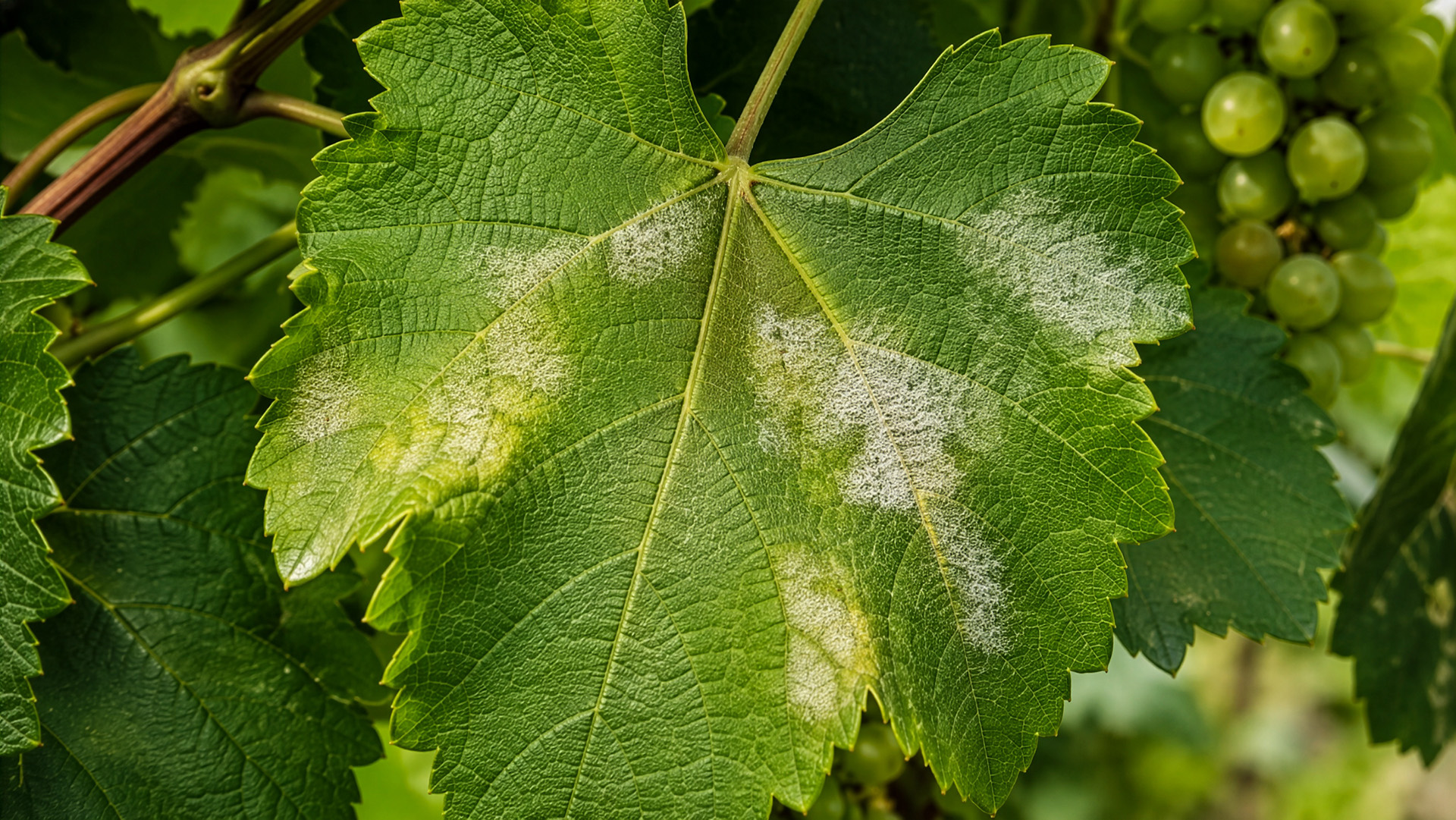
Sauvignac shows very good resistance to pests such as downy mildew
The late budbreak of the vines can also be an advantage. In regions at risk of late frosts, the young shoots often remain protected for longer, and the variety is also considered to be relatively resistant to winter frosts.
Ampelography and Growth Habits of the Cal 6 04 Variety
In the vineyard, Sauvignac exhibits some interesting characteristics, as it can be successfully cultivated in a variety of locations with different soil types and in various climate zones. The vines’ growth is reminiscent of Riesling in many ways. The foliage is relatively dense, while the wood maturity is considered very good.
Yields are usually similar to those of Riesling. At the same time, the grapes often ripen uniformly. Full ripeness is frequently reached about a week earlier than with Riesling, which can be an advantage in cooler regions. In Germany, it has so far been cultivated only in small quantities, for example in the Wachtelberg area of Werder.
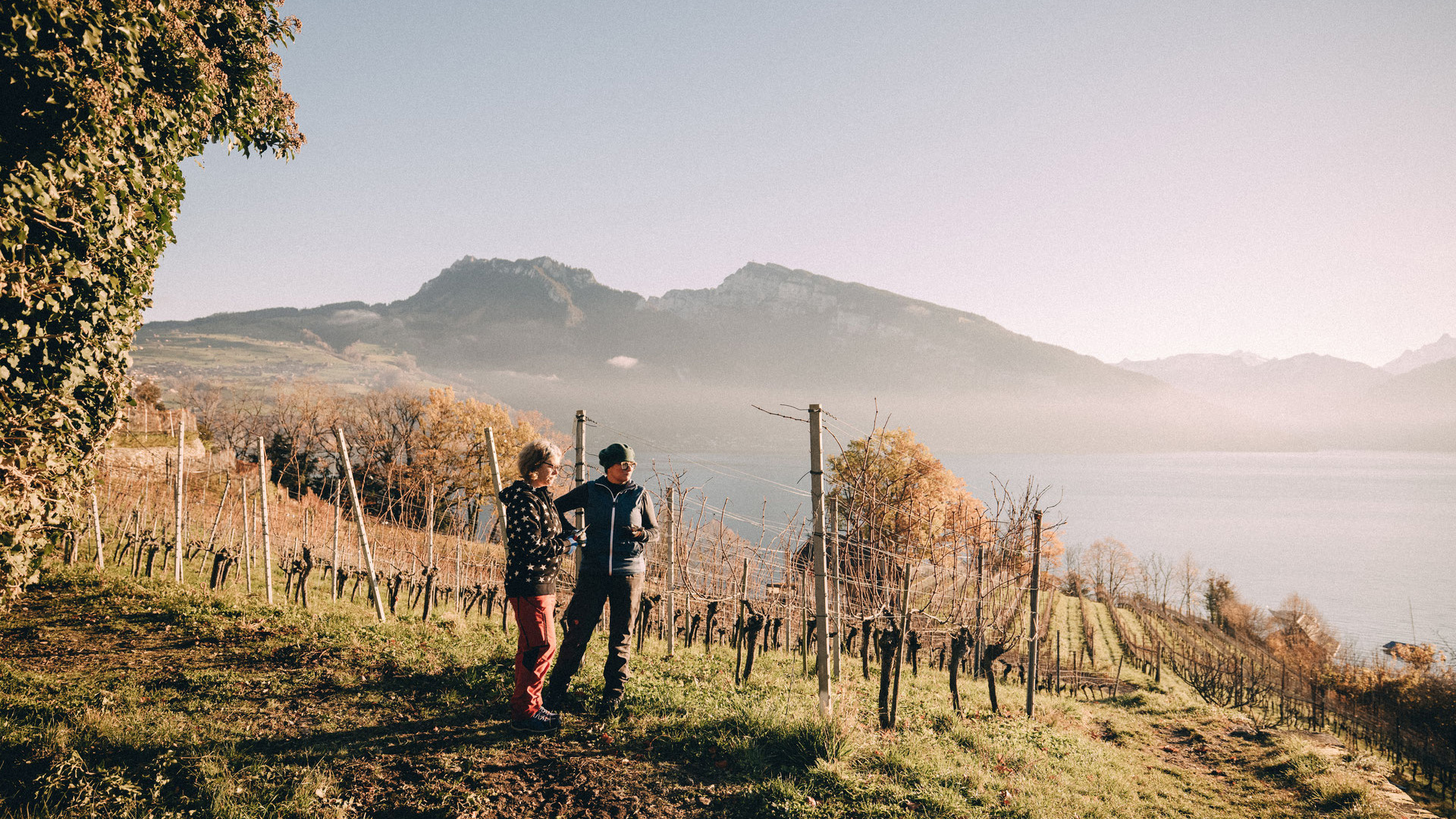
Sauvignac is grown on about 40 hectares in Switzerland, including at the Rebbau Spiez Cooperative [Image 1]
The berries develop a balanced fruitiness and stable acidity levels. This results in wines with a lively structure and distinct aromas.
Aromas, Fruitiness, and Style of Sauvignac Wine
Sauvignac wine is characterized by a fresh, aromatic style. The bouquet often features notes of apricots, apples, and limes. These are sometimes complemented by hints of black currants, reminiscent of Sauvignon Blanc.
On the palate, these wines are lively and well-balanced. The acidity lends them freshness, while the fruitiness gives the wine a pleasant fullness. It remains remarkably lively even after some time in the bottle. The clarity of the fruit is particularly prominent in younger vintages.
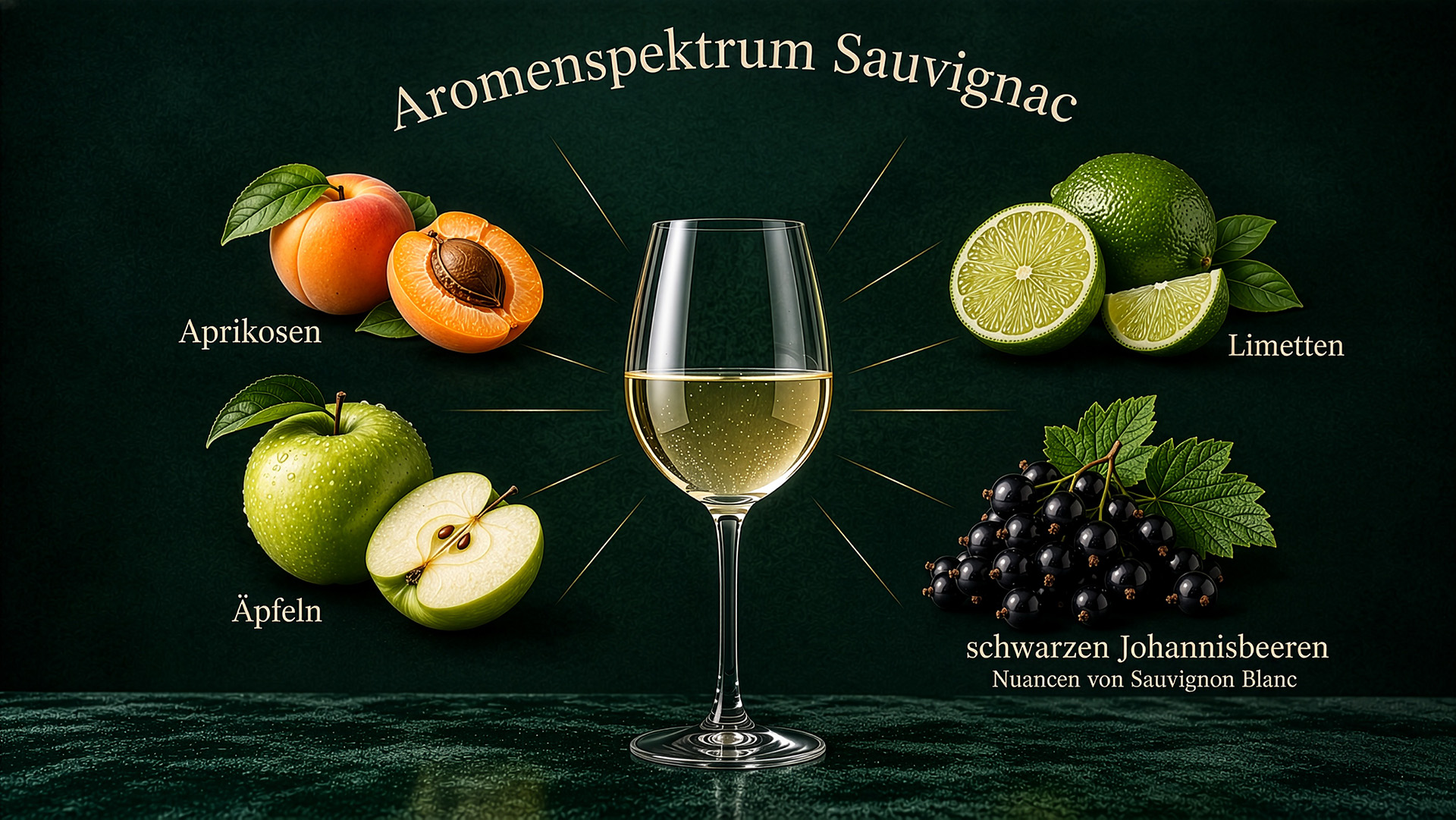
As the wine matures, more complex notes may develop, but stylistically, the spectrum ranges from young and fresh to Spätlese with a higher Oechsle level. Subtle hints of herbs or floral aromas are also possible, sometimes with green notes of grass, gooseberry, or green bell pepper, and an aroma that occasionally recalls Scheurebe.
Sauvignac as a Food Pairing
Thanks to its fresh acidity and aromatic fruitiness, Sauvignac is a versatile pairing for many dishes. The wine pairs particularly well with fish dishes. Pan-seared pikeperch, trout, or sea bream benefit from the wine’s lively structure.
Sauvignac also shines in Asian cuisine. Dishes featuring ginger, lemongrass, or mild curries pair perfectly with the fruity flavors of apricots and limes. The acidity ensures that the combination tastes light and well-balanced.
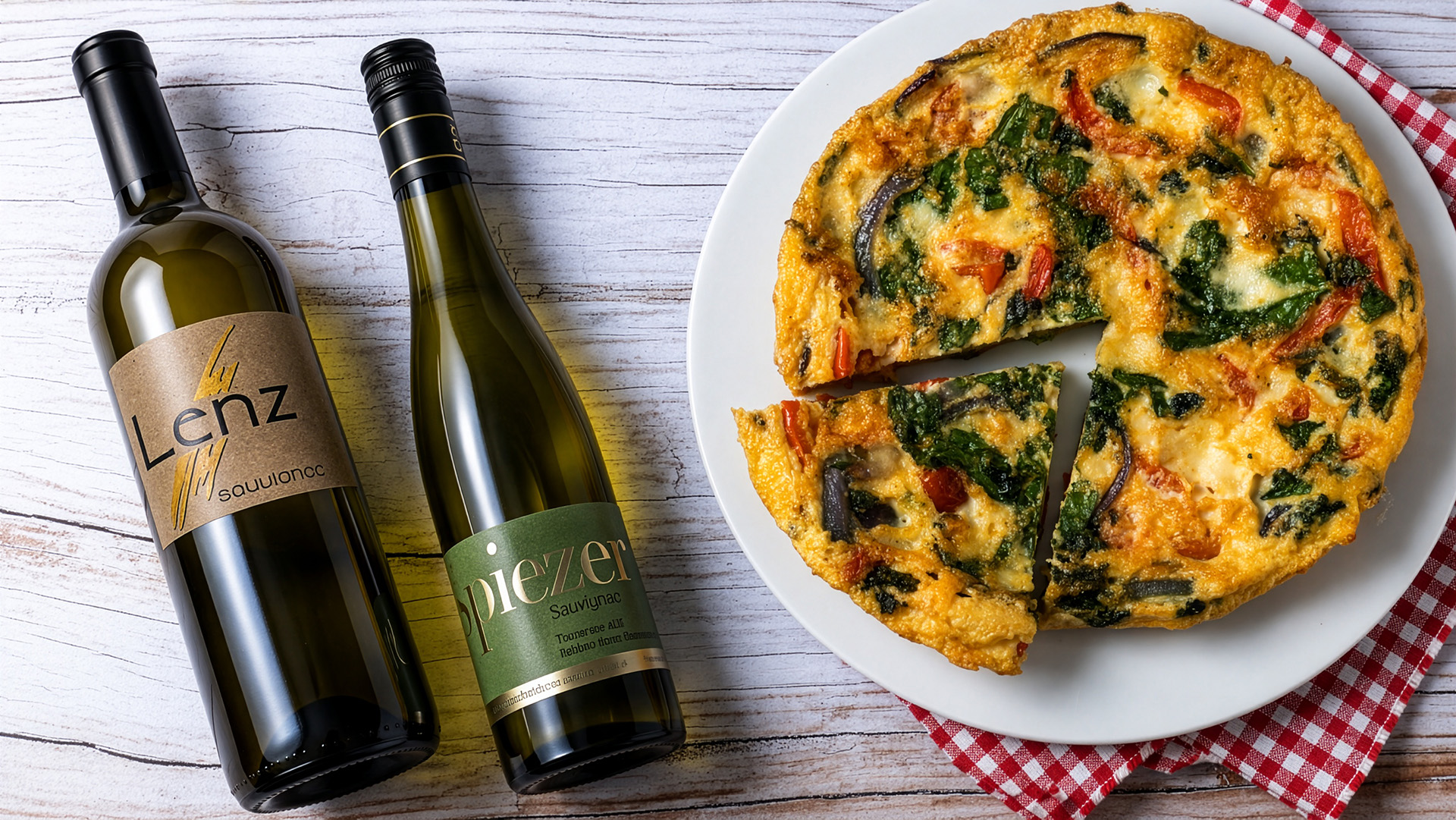
This grape variety also pairs very well with vegetarian dishes. Vegetable dishes featuring asparagus, zucchini, or fennel complement the wine’s freshness. Light salads with citrus dressing also pair well with it.
Sauvignac wine is best served at around 10 to 12 degrees Celsius. A medium-sized white wine glass helps the bouquet to unfold.
Frequently Asked Questions (FAQ) About Sauvignac
What kind of grape variety is Sauvignac?
Sauvignac is a PIWI grape variety and is considered an interspecific new cultivar. It was created by crossing Sauvignon Blanc, Riesling, and genetic material from the Amur grapevine. The goal of this breeding program was to develop a grapevine with high resistance to fungal diseases.
Who bred the Sauvignac grape variety?
The variety was developed by Swiss grape breeder Valentin Blattner. His breeding work in the Swiss canton of Jura led to the Cal series, to which Sauvignac—with the breeding number Cal 6 04—also belongs.
What are the aromas of a Sauvignac wine?
Sauvignac wine typically exhibits fresh aromas with notes of apricots, apples, and limes. Nuances of currants, reminiscent of Sauvignon Blanc, are also often present.
Why is Sauvignac considered a sustainable grape variety?
Due to the genetic contribution of the Amur grapevine, Sauvignac is highly resistant to diseases such as downy mildew and powdery mildew. This allows for a significant reduction in the use of pesticides in viticulture.
[Image 1] Photo: Spiez Winegrowers’ Cooperative